Thursday, December 21, 2006

To Love Your Work

Throughout the course of a long life I have rarely held what most people would call a real job. I make the necessary amount of money to survive and to save for my further ridiculous adventures in swamp world, and then I put in my time reading, listening to the living, seeing the wonders of the world. What a great life it is. Often, even in the midst of terror and pain, it simply embraces me and makes me wonderful. I don't know what to make of it, but I sometimes, even often, laugh like an idiot, overwhelmed by the wonder and the mysteries of it all. I have to work at it sometimes, but the cold hard world seems to love me. I hope it's the same with you. Whatever your life's work, I hope it loves you too.

Wednesday, December 20, 2006

Filibuster for Universal Modernity (2)

In his book from 1971, The Day of the Jackal, Frederick Forsyth writes in passing of Executive Operations, a company known outside the closed world of mercenaries and their dodgy employers only to a handful of journalists and curious folks of some other sort. E.O. provides services for what one might call a niche market but a market that is often more real than most: private security for private businesses and low-rent governments at risk from serious criminal enterprises. In the business of the real world of the living one accepts that there is good and that there is dangerous. It's not a world for the delusional or the sentimental.

This is not a new story, nor is it one likely to go away any time soon or perhaps ever: Executive Outcomes (EO), a private military company (PMC), was founded in apartheid South Africa by Lt-Col. Eeben Barlow in 1989. Controlled by the South Africa-based Strategic Resource Corporation (SRC), EO's role was described by Barlow as offering: "A variety of services to legitimate governments, including infantry training, clandestine warfare, counter-intelligence programs, reconnaissance, escape and evasion, special forces selection and training, and parachuting."
http://en.wikipedia.org/wiki/Executive_Outcomes

In the archives here one will find numerous pieces on American filibustering and Manifest Destiny, the belief that America was given by God to settlers to expand as far as the oceans and beyond. There are many references to "school teachers with guns," the idea of Modernist filibusters going into the world at large as a project of free enterprise to colonize the world and create an America of of the mind in every place, school teachers living in foreign lands, marrying foreigners, raising children to be American in the world today, backed up with guns. In the face of cultural relativism here there are many posts on the International Brigades of the Spanish Civil War. This blog, my blog, is clear that men and women of the Modern West must go into the world and colonise it all, taking over lands in the same way colonists in early America took the land and moved on the Indians who were here before the Europeans and other world setters came. Life is tough, and it only gets better when Modernists introduce Modernity into lands even against the will of the locals, for whom I have little but contempt. Call me insensitive if you must. I can bear it. Better that than to stand by and excuse the primitivism that passes for culture in our world. So long as parents raise their children to be primitives I will continue to call on school teachers with guns to colonize the world to give children the chance to learn to think for themselves, come of it what may. Yes, I suggest, I exhort men and women to settle in foreign lands, that they raise children to be American in the mind, and that those who would preserve primitivism should be shot if they interfere in the teaching of, for example, germ theory.

Is it a cranky man's daydream? The post below is part one excerpted from Tech Central Station.
****

Al Qaeda for the Good Guys: The Road to Anti-Qaeda
By Josh Manchester

Stateless warfighting organizations are all the rage these days. From Al Qaeda to Blackwater, they come in all shapes and sizes and pursue all varieties of ends. Consider: Al Qaeda is an organization funded by a Saudi tycoon's heir, and exists to pursue strategies that are wholly outside the realm of policies of any given state. Indeed, it seeks to topple the governments of many states in the Middle East, from which it draws many of its recruits and funding.

The Mahdi Army is a large, subnational Iraqi militia of something on the order of 30,000. It gives loyalty to a Shi'ite cleric, Moqtada al-Sadr, whose motives are suspect to say the least. Does he merely desire to defend Shi'ites, or does he wish to seize power in Iraq?

Now shift gears a bit and consider Blackwater, the world's foremost private security company. A recent article in the Weekly Standard described its capabilities:

*A burgeoning logistics operation that can deliver 100- or 200-ton self-contained humanitarian relief response packages faster than the Red Cross.

*A Florida aviation division with 26 different platforms, from helicopter gunships to a massive Boeing 767. The company even has a Zeppelin.

*The country's largest tactical driving track, with multi-surface, multi-elevation positive and negative cambered turns, a skid pad, and a ram pad for drivers learning how to escape ambushes.

*A 20-acre manmade lake with shipping containers that have been mocked up with ship rails and portholes, floating on pontoons, used to teach how to board a hostile ship.

*A K-9 training facility that currently has 80 dog teams deployed around the world. Ever wondered how to rappel down the side of nine stacked shipping containers with a bomb-sniffing German shepherd dog strapped to your chest? Blackwater can teach you.

What's the purpose of this organization? In a nutshell, the Standard article reports that it is "supporting humane democracy around the world."

What is the future of the relationship between states and such stateless warfighting organizations as those mentioned above? Why might states come to rely more and more upon stateless proxies? Here are a few reasons:

[....]

Aside from the interests of states, consider the future of private security and stateless warfighting organizations from the perspectives of those organizations themselves. Here are some considerations:

[....]

One of the biggest public relations problems for companies such as Blackwater is the recurring taint of being considered a firm full of mercenaries....

The world of stateless warfighting organizations - many of which will become state proxies - is here to stay. It will be fraught with controversy as the issues delineated above seep in and out of the news.

In the part two of this series, I'll look at what an al-Qaeda for the good guys would look like.

http://www.tcsdaily.com/article.aspx?id=121606A
****

Stephen Austin founded the Mexican state of Texas and went on to found the Republic of Texas before it became the American state of Texas. Austin didn't call forth settlers to change the world for the benefit of Mexicans in Texas. He called forth men and women to make money and to live better lives than they lived in Arkansas, for example; and to Texas people went to live and to be alive as individuals. People went to live and to work and to create. Many Mexicans resisted the American settlement of Texas. So what? Today they die trying to go to the America Texicans have made. Take America to the world. Make every place America. And in so doing, not one place will be anything more the same than is New York to Alaska. It takes men and women who want to build for themselves a new life in far away places for personal reasons. It's been done many times before, and it will be done again, in our world at large, in outer space and beyond. There will be those who don't like it. They can stay behind. If they try to prevent it, shoot the bastards.

Saturday, December 16, 2006

Happy Chanukah


Shabbat Shalom.

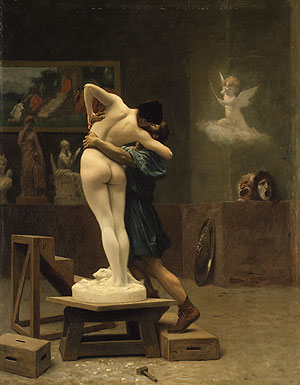
I don't have a menorah in my place at work, but I do have a picture of one of my heroes. He watches over me, as he is watched over too. My debt is unending, and I am grateful for it.

Thursday, December 14, 2006

Derek: Mother of all Cartoonists


I was looking for something to go with Derek's graphic, [ http://thestudyofrevenge .] This amazon.com review seems appropriate.

" Londonistan" (Encounter Books), by London Daily Mail columnist Melanie Philips, is an eloquent warning of the dangers of "multicultural paralysis" and appeasing what Philips calls "clerical fascism." She sees Islamist demands for special cultural privileges as a threat to British democracy and documents the rise of anti-Semitism.

http://www.tcsdaily.com/article.aspx?id=121406C
****

Wednesday, December 13, 2006

On Tradition

Thomas Mann wrote in Munich in 1904:

Strange regions there are, strange minds, strange realms of the spirit…. At the edge of large cities, where streetlamps are scarce and policemen walk by twos, are houses where you mount until you can mount no further, up and up into attics under the roof, where pale young geniuses, criminals of the dream, sit with folded arms and brood.
****

Adrift on Denial National Review Online Blogs.

****

In his novel Germinal, Zola calls him Stavrogin; in Crime and Punishment, Dostoyeskski calls him Raskolnikov; Conrad writes of him, as do Graham Greene and Hertzen and others. When people spit in disgust a t the idea of revolutionaries and Modernity, they do so with these characters in mind, these repulsive parodies of Humanity, these creatures of Romanticism gone worse. Ours in the Modern West is a Romantic culture, and we suffer from it. Our heroes are creeps.

Our words fail us. Che is not a revolutionary; he's a pretty-boy who killed people. A revolutionary in fact and deed is Francis Bacon. The huge and ever-growing pantheon of revolutionaries does not have room for Karl Marx. Gutenberg and Luther, yes. William Bullock, inventor of off-set printing; Salk, Banting and Best, Madam Curie; Charles Parke, who invented plastic in 1862, and Charles Goodyear who invented pliable rubber, these are people who were not revolutionary but who, like us, live as revolutionaries in the world because our forebearers were revolutionaries indeed. We are not revolutionaries among our own but within the world at large we are the menace that has no bounds. We are Modern. That is revolutionary. many of our own hate it, and they wish to return us to a pre-revolutionary time, one of fascist Romance, of a time when communalist man lived as a farm animal tended by his entitled and privileged superiours. We've had that revolution to free ourselves from feudalism, and there will be no neo-feudalism for us now, not again. Parke invented plastic, but Luther invented the world that made him able to do so. It's not the plastic, it's the ability to think inventively that counts. As important is the right not to have to think at all if one so chooses. One has a right to privacy. One must have the right to say so in public without fear of reprisal. It is revolutionary to be able to think for oneself, to have the freedom to think and to invent new things and ideas. That is Modernity.

The German reaction against t he French Revolution and the Industrial Revolution gives us the very word 'reaction' as a political term. Romance, an English reaction against the Industrial Revolution lead the Germans again to extremes that we today think of wrongly as revolutionary, as ecology, as identity politics, as moral relativism. These things are not revolutioinary, they are reactionary. Today's progressive Left is yeasterday's reactionary Right, and most people can't figure it out. We must, or we will find ourselves in a state of utter confusion about who we are and what we value. This is especially true of the concept of Tradition.

I wrote recently a parody of Revolutionary Modernity. The problem with that is that it's so commonly accepted as real that the parodic elements aren't, apparently, very funny. I wrote of tradition, and now i see that it is true to most people in the West that Tradition is seen as somethink akin to moral and intellectual fly-paper. Only what is new is interesting to them, all else being "so yesterday!" Comes to mind the reduction "DWM." Anything written or conceived by dead white men is seen to be bad, uncritically so, and unarguably so. God help us, we are swarmed by teenage fools with grey pony-tails. People have no better understanding of the term Tradition than they seem to of Revolution. Our most cherished are those who sweat in garrets brooding and smoking pot, dreaming up knew resentments and self-pitying programmes for grant applications. Some of these monsters kill people. We call them revolutionaries, but they are nothing of the kind. Ben Franklin, the man who saved the world from the Dark Ages with the invention of electricity, is a revolutionary. A Traditionalist.

Below we see Charles Henry's take on Tradition.
****

Tradition is like cooking, it's not automatically bad (unless it's my cooking!) and it's not automatically good; it's dependant on How it is what it is.

I view tradition as necessarily abstract, a thing existing in adaptable principle, not as absolute rule; tradition must possess a slight vagueness to it, so that there may be room for adaptation.
Your example of a man having to take off his hat to enter school, suggests that the tradition is having the humility to show respect for learning: it is the principle of the thing. It is not a Rule that one must wear a hat so that one may take it off upon entering a school, or that there must be schools built so that there be things to take one's hat off of upon entering, or that armless men must be given hat-doffing machines in order that they too may be made capable of showing respect, of participating in the tradition to do so.

Is it not the case, that the more meaningful the tradition, the more it is laid down in principle rather than rule. When Moses brings down the commandments, they are all outlined in principle, rather than explained in detail, requiring us to rise to the challenge of interpreting them. That's a respect for the student that any teacher can learn from.
"You shall not murder", as a principle, makes us have to reason when killing is not murder. "Honor your father and mother", as a principle, makes us esteem that which came before us, while being grateful for our existence, and makes us reason how that may be done: by simply repeating that which our parents did, or by adding to their experience… by progressing from their contribution, using it as the starting point. Sometimes the honor will come from repeating, and sometimes by departing, from the parents example. To tell which is which, we need to think of "honor" in principle, not rule.

"Having no other gods before me" is a great procedure for remaining humble, a necessary ingredient for learning (the moment that someone thinks there's no longer room for improvement, that corresponds to the moment they begin to decay); as well it helps us avoid the danger of idolizing fellow humans as somehow incorruptibly perfect… which is the height of human arrogance. It doesn't need to be taken literally, accepting the old-man-with-a-beard ritualized image of a heavenly father. It can be followed, as I sense you have followed it, in principle rather than as a rule, and remain a beneficial code to live by.

As humans engaged in a trade or craft or living off our skills in some way, there will always be someone more skilled than ourselves, either in our past or right alonside us in the present, or coming along unexpectedly in our future. We're all in some glorious "middle", because of the existence of progress. This we are wired as human beings to forget, yet nevertheless capable of remembering, courtesy of the invention of ritual.

By ritualizing a tradition, it supposedly makes the tradition's founding principle more attainable, as acting out a role in a play should make an actor sympathetic to the character being portrayed, whether hero or villain. Where ritual fails us is when the physical no longer stands in for non-corporeal ideas, and becomes the end in itself. It is meant as the means to an end, and when it becomes the end in itself it loses its purpose and fails us as human beings.

Tradition, I firmly believe, is necessary to humanity, in that it is part of the proof that we are human and not animal. For example: Tradition makes us dress in a way that ennobles the people with whom we are interacting, suits and ties being merely the present form of the ritual; the five senses that animals possess omits humanity's "sense of occasion".
Tradition is to eat food by raising it to your mouth and not lowering your mouth to the food, to not chew with your mouth open, siting up straigh yet leaving elbows off the table, actually having a table to eat at… all in accordance with our attempt to ennoble dining, by humanizing it, raising ourselves above the animal way of eating our daily sustenance.

Believing that there's something better to become, is our fundamental tradition as human beings, and we struggle generationally to remember that and to understand it's implications.

We can follow these traditions in principle, as you do, and be made better for them. The more they are taken as Principles, rather than Rules, the more universally beneficial they may become.
****

Our Gnostic elites forage at the fringes of reality and they rule our discourse with their scrounged findings. We must see them for who they are, creatures of ugly dreams and evil delusions. New ways of expressing old hatreds is not revoluitionary. It is sentimentality, unfortunately another word commonly misunderstood. Tradition, as Charles points out, is not new, it is renewable. It is a stability in revolutions of our beautiful Modernity. Brooding Romantic haters are not worthy of our time, and we must actively stop paying attention to them. We could benefit from paying attention to some of our recently discarded traditions.

Tuesday, December 12, 2006

Paean to Household Cleaning Products

As the two university professors approached the gates of the school, the visiting Englishman doffed his hat. The American asked why he'd done so. The Englishman said: "In Britain it's a tradition that e take off our hats as we enter the gate to the university." The American paused briefly and then said: "As of today it is now a tradition here too."

I don't come to the thought of tradition via the cautious wisdom of Edmund Burke. Rather, I see in tradition images of tiny coffins. Burke confuses me, but the sight of dead children is starkly clear. I think I'm not alone or even in the minority in seeing tradition as reaction, as hide-bound repetition of entrenched privilege, as entitlement, as exploitation of the ignorant by the elites, of misoneism, as, for example, the Taliban. Tradition is a hatred of and destruction of innovation, of creativity, of exploration, of questioning, of individualism, of personal choice. In tradition I see the endless repetition of ignorance that leads to the total closing of the Human mind to improvement, to progress, to betterment, to continued existence of Human life itself. In tradition I see a desperate clinging to power by the corrupt, the savage, the insane. I see "traditional cultures" so beloved of the Left as the worst of Human experience and possibility. I see dead children dead due to their mothers not knowing and not being able to know of germs, mothers who fetch water from streams chocked with shit, mothers cooking with water bobbing with turds, women washing their clothes, themselves, their children in sewage; and I see tiny coffins. One doesn't interrupt the ways of a traditional culture unless one is a horrible neo-colonialist such as myself, a racist Yanqui imperialist. That children die because parents are too incapable of thinking in sequence is not of import to the philobarbarist Westerner. No, what matters to them is the fetish of "tradition." It is the philobarbarist whose head I would remove and shrink on a stone in the name of my own tradition had I my evil way. Tradition is whimmitude, is slavery, is sadism, enslavement, torture, murder, and ritual murder. Tradition is revenge, is fury, is Irrationalism, arbitrariness, and rote. I have no liking of tradition.

Tradition is more than what I see it as, though the definition of tradition in terms of Judaic rites is arcane to me, removed from my grasp of living, and not to be bothered with other than to be accepted as the way of friends in their privacies. Tradition is something only a 21 year old should be allowed to accept.

I see tradition as a mental and emotional slavery. There are some, perhaps many, who see revolution as Che Guevara, as wild-eyed lunatic killers bent on imposing on the people dystopian nightmares and mass pogroms. I see revolution as household cleaning products. I see revolution as germ theory. I see revolution as flush toilets. I see the banalities of a clean floor as the ultimate in revolutionary victory over reaction.

Allow me to stop here briefly to indulge myself in some rather fine poetizing;

"Ode due Toilet"

A fine man of History and dapper
Is our universal friend John Crapper.

Crapper is a hero without vanity;
He put back the needed sanity
Into sanitiation.

We can now continue with my understanding of Modernist revolution, at least until I am again caught up in this passion for cleaning products that makes me versify so profoundly.

Like most people, I use Mop and Glo as hair tonic, toothpaste, and shoe polish. But by chance I have discovered a use for it that exceeds all others: I don't actually like the taste of Mop and Glo at all, finding it enough to make me gag in the morning when I brush my teeth with it, which lead once to me gagging it up all over my floor. I bent down and swabbed it up only to find it made my floor both clean and shiny. A miracle! I love the stuff.

I also love Windex. I used to wash my dishes with it, it leaving my wine glasses absolutely spotless. Now I also I spray it on my windows and wipe them with a sheet of newspaper. The glass comes out clear and shiny too. Life really is good!

And it gets even better, friend. I discovered Tidy Bowl. I clean my toilet with it. Oh, yeah. Life. It's the best thing going that I know of. Much of the reason for it is cleaning products. I'm a fan.

Floors, windows, toilets. There are so many places on Earth that I've lived where such things don't exist that when I moved to Canada and could take them for granted I nearly fell over from shock. I sometimes forgot about the ordinariness of doors and windows and floors. And cleanliness? Live in a jungle for a few years to come to fully appreciate it. I love Tidy Bowl. Flush toilets turn me on so badly I want to remarry just to have someone to share the joy with. In fact, I want everyone on the whole planet to have a flush toilet, windows, and a floor one can mop clean. Hardly anyone has such things, and there are many in our Modern world who think that's a good thing. That wouldn't be me. I am a nut for household cleaning products. Call me a revolutionary if you will, and you'll find I say "Yeah, baby."

Having clean water to wash a tile floor is revolutionary in our world. Having a flush toilet is a profoundly moving experience. Having windows that keep out bugs and snakes and filth blowing in the air is supremely challenging to the traditionalists who would have people living like an anthropologist's wet-dream phantasy. Clean people are healthy people, and healthy people can and do ask "Why?" That is the end of tradition.

The Left fascist move to an imaginary pre-lapsarian Eden of equality and mindless bliss is a move to tradition, in my understanding of the term. It is communitarianism, slavery of mind and body, of violence, of disease and death. Tidy Bowl, Windex, Mop and Glo. It is so trivial that only when you live without knowledge of such things is it revolutionary. And it is revolutionary. It is Modernity itself. Long live this revolution and the people who are clean and healthy because of it.

In deference to those who are traditionalists still, I offer this prayer to the gods of my life:

Our man who art Oats, Quaker be thy name.
Hail Aunt Jemima, full of nutrition.
Blessed is Betty Crocker among women.
Thank you God for the extra strength of Mr. Clean.
And amen to vivisectionists who wantonly murder lab rats.
For truly we are blessed to live in our beautiful Modernity.
Thank God!

Sunday, December 10, 2006

Hip Gnosis

Hip Gnosis

We sit and watch a train wreck in the making before our eyes, this destructive course that Europeans are on, and we cannot do much but be sickened and horrified by it. The collision between two powerful forces is happening as we sit, and there is only a helplessness and sickness on our parts, there being nothing we can do to stop the coming carnage the Europeans so blithely watch with us. Europeans, though, don't seem to grasp the problem of the collision. They seem to be in a state of hypnosis, entranced by magi who play them for fun and the amusement of the elite at a Follies show.This hypnosis I rename "Hip Gnosis."

For those of us with a sadistic sense of humor, the situation in Europe must be highly entertaining. It has all the comic elements of the Roman arena, terrified peasants huddled together awaiting the lunge of lions who will rip them to pieces-- for the amusement of the crowd. Europeans sit in blissful and stupid ignorance as the rest of us try to shout warnings they cannot hear. Those in the loge seats laugh their heads off, no doubt. All that one can suggest to account for the bewildered stupidity of the Europeans is hypnosis.

I call this European state of stupor "Hip Gnosis" to call attention to the fact that most Europeans seem to think they are morally superior to all other people, too hip for the crowd of red-neck Yankees and Republican imperialists who don't know the difference between the long-stemmed wine glass and the short-stemmed. Europeans seem to be caught up in a state of -- which?-- moralistic nihilism or nihilistic moralism? All of it is nothing more than a hideous pose of poor actors, of sleepwalking creatures guided by the most evil miscreants of our time, the gnostic fascist dhimmis of the Left. Yes, the gnostic elites have hypnotized the vast majority of Europeans. Even Toto can figure out this scam; but Europeans, so addicted to their hipness and moral superiority, a bit of a limp after the past century, are determined to play out this hypnotic ritual, knowing, (they must,) that yesteryear's white and red fascists are today's gnostic Left fascists. But it's so hip to say the gnostic lines.

The lions? Well, they too are part of Nature, besides, they won't hurt us because we gave to Greenpeace. We're hip, we're gnostic.

I call it Hip Gnosis.

Saturday, December 09, 2006

Phaitheism

I live by the sea, and many times in my life I've lived below its level; but rergardless of where I find myself, even if it be for years, I am a mountain man of mountain people, a barely covered savage, a mountain ranging pagan at the core of my soul. In my heart of hearts I still live in the Rockies, the Appalachians, the Grampian mountains. The atavism of my existence is clansman Highlander, layland Riever, sea-going Berzerker, but always in my blood is the mountain air and the sight of afar. Today and for most of my life all of it is clouded by atheism. My own are wild, and the depths of theology shouldn't be any concern to us. We aren't just pagans, we are killer pagans. And in the West of our Modernity many of us have turned to commerce, leaving ourselves empty and disillusioned. When my especially distant relative said "Thank God war is so terrible for otherwise we should love it too much," he turned his face to me and I saw him snicker.

I live in a phantasy life of commerce and good behaviour. I smile and make some money, pay the rent and go to the opera, and then I flee into the wilderness to meet my own in combat of various terrible kinds. Oh ho! I got some big, deep scars! But the worst wound ever I suffered is the death of my gods. I have some reckoning of Modernity and normal living with people who think rationally and who are decent and ordinary folks. My gods embarrass me. I hate them for it, and I abandon them. For making me do that I hate them even more. So I'm an atheist.

I'm not an atheist because I'm a dedicated logician, a devoted rationalist, a man dogmatically committed to Reason; I'm an atheist because I don't have the imagination to see beyond the tableau of my indifferent gods in the endless empty skies. My god is the highest of the dead, ruler of fighting men, mount-born, flame-haired, blue-bellied smashers and rippers exultant. My god is the god of fighting men who fought their way to bloody death to exist alone in the endless empty skies forever. I live a quiet life in the suburbs, work at a slight business of buying antiques to sell at a profit. I am a boring man. My god is indifferent. I can't even believe in him and his own. I close my mind's eye and gaze into the endless empty skies, and I don't even hear mockery from the depths. There is nothing. There is only unechoed Atheism.

I run my fingers over the finest silk and make my offers, my banter, my gambits, and all the while I am attuned to the shrill pitch of the Highland pipes and the rush of the surging river through the glen as my feet fly across the heather to charge in the heights of joy, the singing claymore arcing, targe banging, the crack of bones and the shrieks of pain filling the cloudy skies like rain. "Well, sir, I could take two at the price you offer, but that would be the death of me as a trader. Let's have more tea."

I drag my sorry self from the slumbers of night to face the dreary dawn of another dull day, and I battle the forces of self-interested traders like myself. They, like me, look into the depths of the endless empty skies and long for knives and edges and man-to-man meeting of the mind in blood and abandon. We see in each other the smiles of dead dogs on the roadside. It's hard sometimes to believe I do such things for a living.

I was Cypriot, Ion Allogenes; I was Dutch, Jan Eycks; I was Manx, Yn Greeley. Wherever I am it's not where I'm from, a placeless man. My name is a joke each time. I am a foreigner, Mr. X, gee really. I scoff at the laws of Man's made motions and go where I will as I can. I stare stupidly at the laws of restriction, and I come and go. The gods are indifferent, and the joke appears to be on me. I shrug. There is no higher law than motion.

Then, in my wandering way, my atheism has encountered faith. I have traded in numerous idols of the marketplace over the long years, and I have encountered faith at a bargain many times. Believing it to be of little or no value, I passed it by. Then, in my wandering way, I stumbled, near on a year ago, into the caesura that is phaitheism. I wake up trembling in a sweat. My faith in the indifference of my gods in the endless empty skies is shaken. I waken to words in the darkness. I'm nervous. My former certainty in my own banality crumbles and leaves me stumbling unbalanced, desperate to clutch at the gods who do not notice and would not care.

I sit with men of Faith and my small heart is pounded. I do not know. In my atheism I resemble my former loving self the way ashes resemble a fire. My love is the dust of ashes. I trade this for that and that for more for something else. And I wander. I wander why I do not know. I sit with Men of Faith. I stay.

My own hewed stone and crushed men, raised up monuments and laid down the living. I dance naked in the moonlight in the Ring of Brodgar. We are fighting men, and damn the gods who do not care. We fight them too. I raise my fist to shake at the endless empty skies, and in place of my blood- crusted sword I find my hand grasps the cheap silver of shillings. I haughtily stomp on the stone a weak man would use as a pillow; and I run my fingers over fine silk and dream of the glory of a few pounds more or less. My mountain heart could break like the stones of Avebury.

I see the jackals of grief all around us; and I see Men of Faith with faith stripped bare to the bones. I sit in Faith and stare stupidly. Min' yon kin: bloody men of Faith, they set sail and left us and me alone to stare into the endless empty skies of atheism, our backs to the cold stone draining the warmth of life from us. I growl and threateningly wave my fist tightly grasping shillings. I am over-powered by quiet men. I am humiliated.

I kick at the caphrophagic dogs of grant-fueled pity; and I am driven hard to my knees by the sight of Faith. What path is clear through the blood-fed heath? I would go there if I could along that path. The pipes, they call, and I must go, my blood rushing, my eyes filled with hot tears of joy at the thought of battle. I look at my foes arrayed, and I rush up to the mountain heights of my soul. It's then my god turns and laughs, banging his hilt on the targe, the blood echoes across the endless empty skies, and the dead howl and stomp and rejoice in us who will join them, we who are fighting men. Underneath our contempt for ourselves we are fighting men, just down from the hills, awkward in our suits. I hear the pipes and feel the hair on my neck bristle. My shoulders roll and my arms rise up and I rejoice in the coming blood rush.

In my wanderings the God of Job has beheld me. I stomp my foot. I pound my sheild. I holler at the endless empty skies. Job suffers, and I can do nothing for him. My gods laugh at me. I laugh too. Job in his desert suffers, and my gods laugh because I see that my mountain manners bring me to stand by Job as he writhes. The crazed mountain war-blood brings me to stand by faith and fight for it as it is in itself. I'm not Job! My gods are laughing, they stomp their feet, they pound their hilts upon their targes, we all howl.

I live beneath contempt. Give me one stotinki, more manats. I make a few bucks here and there. My life is so unbelievably banal I can't even imagine that I was once a warrior of the mountains. It is only hidden. My own gods do not care. I see Job. If I refuse to see my gods, they do not care. Job's God beheld me, and so too will my own again.

My companions sit by the fire and whisper words of faith. The beauty of the battle is on us. In that I have faith.

Friday, December 08, 2006

That is so Muslim

We survived yet another of our weekly Thursday evening Blue Revolution meetings at Vancouver's central library. This evening, as we chatted and waited for new attendees to join us, Charles pointed across the atrium to a woman being beaten by a group of men. He said: "That is so Muslim."

And sure enough, as the evening wore on, Truepeers stopped us and nodded toward a group on men beheading a fellow whose hands were tied behind his back. John said: "That is so Muslim."

I am usually oblivious to my surroundings, but when I noticed a group of old women mutilating a young girl I found myself saying to the folks at our tables: "That is so Muslim."

After our meeting broke up at 11:30 I decided to pay a visit to our friend Jane, who didn't answer her door because she was being gang-raped. Well, I huffed, "That is so Muslim."

I toddled off home past a gang of young men burning cars along the street, throwing rocks at the police, and gang-raping more women. I heard a passer-by say: "That is so Muslim."

I think Charles has started something that is now out of control. Every time something typically Muslim comes up, such as those events above, I hear people saying: "That is so Muslim."

Pretending none of these things happen? "That is so French."

Thursday, December 07, 2006

Poietes


Birds and insects make things, nests mostly, but little beyond that; and animals seldom make anything at all, except beavers who block up waterways with debris to make dams. As builders, animals are mostly slackers. And until roughly 5,000 years ago people weren't much better than the average felt-lined beaver or scarlet pismire or scissor-tailed fly-catcher. Hunter/gatherer people didn't do a lot of construction, didn't make much. They made stone tools and temporary shelters, and they did make pictograms and petroglyphs. It's the latter that separates men from termites, I think. In terms of zero to one hunter/gatherer Man is significant. Beyond that, not much.

The beginnings of agriculture turned man into a beast who had to make things other than temporary shelters and stone tools. Agriculture, in a real sense, pushed man to become a genuine maker, even a poiete, the Greek word meaning a maker, a poet. Yes, Language Man and Pictogram man and Religion Man is a far remove from ants and birds, but it's agriculture that begins the long and perhaps unending move toward greatness. Without the clear sequential narrative of something like the Epic of Gilgamesh or the Iliad Man is not really much more than a biological curiousity adrift in the darkness of space. It's real making of the mind as something universal and both private and public that makes Man something great, and that is poetry.

To know of and speak of Gilgamesh and to pass on Gilgamesh to others is a step into reality unlike that of anything else in our known universe. To make, to poetize, is to create privacy and publicity, that which no other creature can do, and that Man didn't do well till he became the Maker himself. "He" is not me, my privacy being not him, my publicity being something akin and shared. To organise this Other narrative to share with others, that is poetry, making. It comes from Ur.

When every man owns his own plot, as it were, he is himself in his own mind and in the eyes of others who can see themselves as atomic in their own minds' eyes. When publicity is possible it is so because it is comprised of privacies. The conduit is poetry. Religion is a binding; and poetry, the base of religion, is a made thing of individuals that binds. When that religious binding is ossified and policed and atrophied, as it is in the poligion of Islam and the ideologies of the 18th century that so badly inform us today, then man is no longer a maker but is a thing of the hive, a flock peice, higher than a predatory beast in the wild but not the thing of greatness that man is meant to be. The rote-driven slave makes nothing at all. when the one poem, the great narrative is frozen in tradition and fear of change and growth, then the life of the mind of man is wrecked and Man is diminished and made worthless, a mere parody of the poet he could be. Man is then a farm animal.

The Poetry of Man is rightly the moral of the story, writes Dag. To make the metaphor of the Moral as universal as math, surpassing Numbers, that is some great thing. No one can do so or think so if ones privacy is trapped in a publicity of rote and misoneism. It is the fulfillment of man to create the path to the paths of the moral. That makes us, and anythikng short of it, any obstruction of that search for the universal metaphor of the Moral, is a crime against Humans forever.

Come writers and critics
Who prophesize with your pen
And keep your eyes wide
The chance won't come again
And don't speak too soon
For the wheel's still in spin
And there's no tellin' who
That it's namin'.
For the loser now
Will be later to win
For the times they are a-changin'.

Bob Dylan

Join us this evening at the library. We'll talk about many things; VPL, atrium, 7-9:00 pm in front of Blenz.