Monday, September 10, 2012

Iquitos, Peru: San Juan Market, Part One (of 3)

For a perennially homeless man I am dead keen on amassing cool stuff for the house I never quite get around to buying and living in. If I had a house it would be filled top to bottom and including the yard and garage with stuff from all over the world that I have picked up because it's such great stuff, the excellent work of the minds of people who have a love of beauty.I love stuff. It's a problem for me in that my backpack is limited in space, and the post costs more for shipping than I would likely pay for what I would like to have. So I look at things, take some photos, and dream of that long away day when I open the door of my home and gaze in wonder and contentment at how nicely I live in such a pretty place. Till then, it's window shopping for this guy. Join me as I wander in the market on the outskirts of Iquitos, Peru.


I have any number of tin boxes on shelves overflowing with books, and the tins are filled with old coins that migrated to the bottom of my pack as I moved from one place to the next, the coins too worthless to fish out and cash in as I left. So they become memories of long-ago visits to far way lands. I have more coins now, and I would be very happy to put them into lovely wooden bowls from the Peruvian Amazon. Or, I might leave the bowls empty and just gaze at the beauty of them.


I would if I could have more than one, of course, more than two, and probably as many as a minimum of four, more than a set, if not quite a collection, enough to create a collection, to give a sense of context, to create a depth of wooden bowls one could liken to the other, a way of seeing a pattern of wooden bowl beauty. As is, I splurged at the Belen Market and bought a smallish bowl I have no room for anywhere in my life at this time. I fear I might go so far as to buy other, bigger, heavier, lovelier bowls at the San Juan Market and then figure out what to do with them later.


These bowls do represent the work of logging in the Amazon Rain Forest, which as we are all aware is the Lungs of the Earth. If one cuts down a tree in the Amazon, then the planet will suffocate because of science stuff and stuff. But I don't care. I am a fascist. I love these beautiful bowls, and choke on that, hippie girls in California, I just might buy some.


Although I am a huge supporter of almost all things plastic, that is due to my love of democracy: In plastic one might, in spite of poverty beyond bearing, own a replica of the Throne of the Sun King. Almost everything is available to almost everyone if one is willing to settle for such in plastic. I would prefer, of course, a wooden bowl to a plastic one.

To have and to have not, bowls of grace.

I would prefer many wooden bowls, big and lovely, to one wooden  bowl. But life allows for so much less sometimes. I have a little bowl, and it is a joy. A big joy.

Here´s a bit about: ´´wooden bowls and carvings made from bloodwood, a hard wood with a beautiful dark red glow. Bloodwood (Brosimum rubescens) [palo sangre] is a member of the fig family, and is relatively common in the Peruvian Amazon.´´
http://www.amazon-ecotours.com/subpage/agency%20info/responsible%20ecotourism.htm


I chatted with a fellow who swings his machete over and over a block of wood till he has at last the rough outline of his latest work, at which time his box of fine tools comes out to turn a rough block into a work of art, perhaps a dolphin in wood, perhaps a naked white man lurking in the back of his shop. The dolphin is more to my liking...
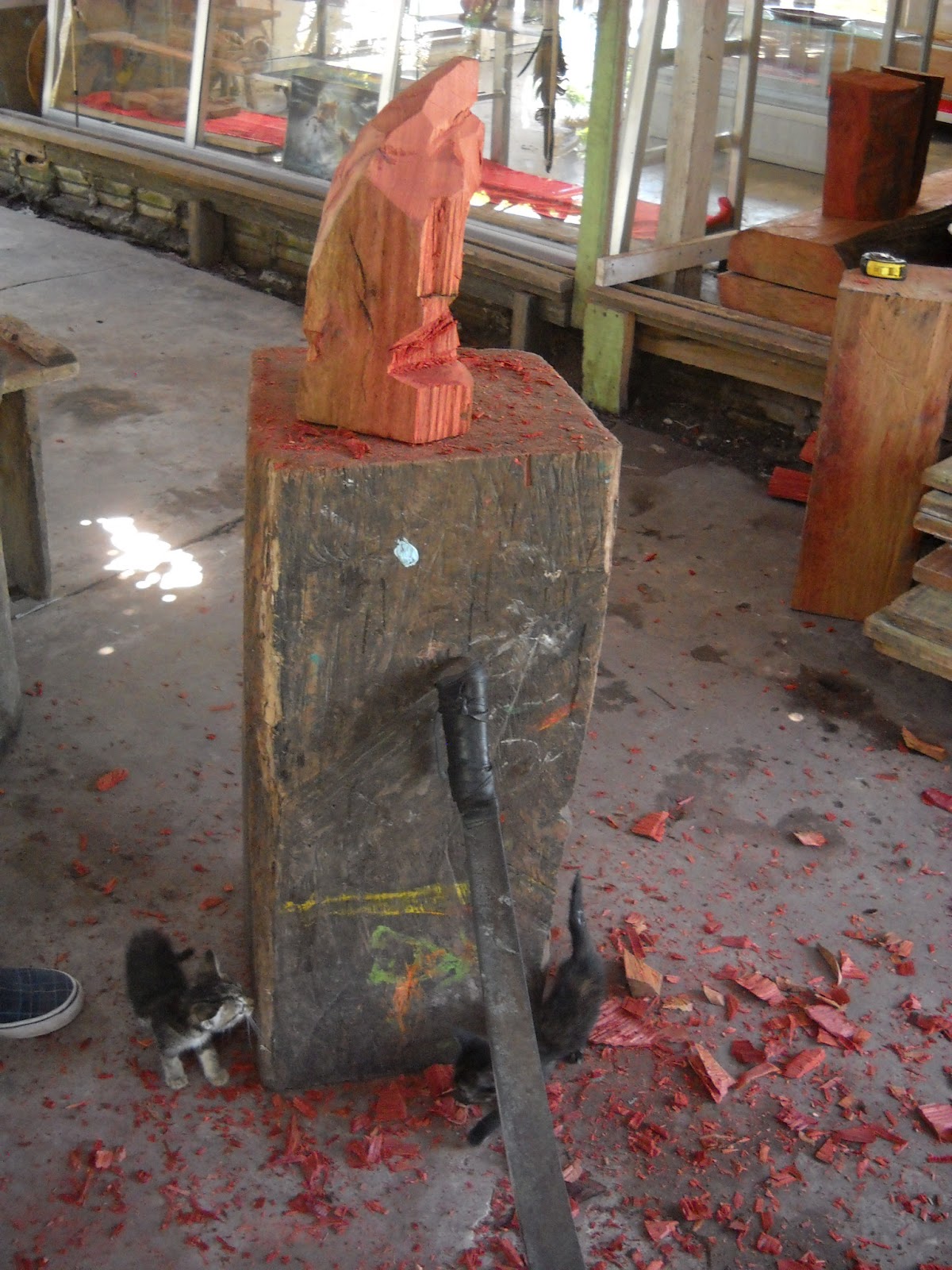

But the carver can do it all-- if one asks.

The painters, too, can do it all, rendering into the now the snakes and such of the immediate environment, making all things safe and beautiful and personal.


The dangerous and powerful anaconda can rest eternally on ones wall without ever being a threat to world order, a matter instead of peace with the world of snakes and harm. Snakes made lovely for a man at home.


One seen snake can provide an artist with a life time of inspiration that he can render real for the masses, giving the image of a long ago snake in a far away jungle a cosmic twist to express a longing and a positive statement of hope of unity with the earth and its powers and dangerous elements. All in paint and safety.


In the security of ones home, at ones leisure, alone to contemplate ones success in the world, one might look up at ones walls and see colour beyond imagination of ones own to find oneself surrounded by jungle and beauty right here, right now. Thanks to a man who paints it for the likes of those of us who admire it.


One might go so far as to mount a moment of an image of Belen Market in ones home, likely a home so different from the poverty of the original that there is simply no reasonable comparison to make. Sentimental, si, pero, it is beautiful and moreso in vivid colour, sin stench and buzzards. Art takes away the ugly that is in the beauty. 


I'd fill my place with beautiful bowls and hang a painting of the poverty of Belen somewhere to see with ease.


I might go so far as to hang a painting of the streets of the city in their colourful chaos, rendered van Gogh for the moment that lasts in mind and on canvas for all to admire.


Had I a house so large as my imagination, I might buy a couple of drums to summon all of my friends for a visit to look at and like my happy home.


Bang, bang, bang. Boom, boom, boom. My happy home, somewhere over that Amazonian rainbow.

 http://nodhimmitude.blogspot.com/2012/09/iquitos-san-juan-market.html

http://nodhimmitude.blogspot.com/2012/09/iquitos-peru-san-juan-market-part-two.html

http://nodhimmitude.blogspot.com/2012/09/iquitos-peru-san-juan-market-part-three.html


A gentle reminder that my book, An Occasional Walker, is available at the link here:

http://www.amazon.com/Occasional-Walker-D-W/dp/0987761501/ref=sr_1_1?s=books&ie=UTF8&qid=1331063095&sr=1-1

And here are some reviews and comments on said book:

http://nodhimmitude.blogspot.com/2012/04/dagness-at-noon.html

Saturday, September 08, 2012

Iquitos, Peru: Crafty, Lady

Craft work. It's pretty enough, and for my gal-pal in Iquitos it brings in some hard cash, like way more than I can afford to spend for a decorative piece that should embarrass the average Modernist. It's embroidery. The lady does it for a living. It should be a matter of protest by feminists across the world. But no, it isn't so. Embroidery is seen as something so special when my friend does it that Modernists with way too much money go into raptures when they spend money on this stuff, pretty as it might be.

My buddy, below, comes by most afternoons for a bottle of Inca Cola with me at the diner I sit at at. She and I posed for a photo, for her a very solemn occasion, a matter of summoning up all of ones dignity-- the photo will last forever, and one must be up to it. She looks fine to me. The teenage girls behind the counter go into hysterics when the lady kisses me. I smile. I'm a lucky guy.


My gal-pal is a Shipibo Indian, one of many tribes from the jungle hereabouts in Iquitos. But the Shipibo have the smarts to monopolise the concept of Native here, all other tribes being more or less unheard of by tourists. There are lots of tribes here, but only the Shpibo seem to have hustled themselves into the minds of the tourists. With this particular p.r. hustle they have also created an art style that is now more or less "Shipibo." One sees it on the side of a building at the Plaza de Armas downtown. To my eye it looks derivative of Paul Klee, but what do I know about art? It's now the Native Standard, i.e. Shipibo Art.


My buddy takes it all very seriously, as do I, even if I can't bring myself to pay for large piece of embroidery like those she carries with her all day every day to sell to tourists, most of who are likewise unable to afford her work. She also sells necklaces to tide her over till she hits on Howard Hughes.  She gave me one, perhaps in payment for a soda one day, and now I wear it in spite of it making look like a hippie. I lack the lady's demeanor, and thus look like a pot-smoking goof wearing a bead necklace. But it was a gift, so I have it on. Maybe I should stop smiling. I find that hard to do.


Embroidery sends some tourists into the ozone zone of weirdness, some of them paying hundreds of dollars for knitting these ladies do as a way to pass the time and to generate some cash. I've seen grown men who at home are likely tyrants in business, titans, too, men who command thousands of people in daily efforts to make the Modernist economy work as it must, babbling and in tears over some piece of cheap cloth an illiterate peasant woman like my friend here embroiders as she shoots the shit with her claque of lady friends on the bench at the park. I cringe when I see men from major cities in America falling over themselves praising the genius of embroidery by a native lady.It's not really special, sorry to write. It's embroidery.


Detail from 3X4 foot embroidery, Shipibo embroidery, 2012, Iquitos, Peru.


My buddy sits at my table and sips soda and embroiders as we chat. Her friends come by and giggle because my buddy has a crush on me. Then they go off across the street and sit on a bench and embroider and gossip about us.


I have a relationship with a lady that I think many American corporate executives would kill for. I chat with this gal and have fun. For me it's not special. For those lost in the world of commerce back home, this is "the real thing." To be with an actual "Shipibo Native Person" is the high point of their trip. And then the tourist will wallow in sentimentality going on about the beauty of the work and how long it must take to do so and how cheap it is at twice the price, as if it has any value at all beyond what one is stupid enough to pay. But it's not about the work or the lady: it's about the encounter with "authenticity." I could barf, thank you very much.


I assume some ugly, dirty NGO hippie came up with this doodle design and toldenough smart people that it is so arty that tourists would go for it if they say it's "Native Art." I kind of like it now that I see so much of it that I'm used to it.


But really, it's the usual liberal arsehole racism at work. To make such a fuss about embroidery by a Native lady simply because she lives in Iquitos, far from California or New York, and that she lives in a shantytown in the Amazon is to dehumanise my buddy. She ain't special. She's an old lady with a whole whack of grandkids who want motorcycles and electronic stuff. She's not much different from Sarah Palin, in that she works and has ideas about right and wrong and loves her family and wants good for her community. Then, because she is not Sarah Palin but rather an illiterate lady from the jungle, she embroiders to sell stuff to tourists who hate Sarah Palin with such violent intensity that such people become two-legged animals one would fear if met in the silva here.


The deep dirtiness of the tourists who go on about the genuinness of life amongst the natives is enough to make me want to torture them with blunt instruments and burning cigarettes.


Embroidery, for the mass who don't get is, is for ladies who don't know how to do anything interesting. Emroidery is one of the curses imposed on weathy daughters of the up and coming business classes of the late 18th and 19th centuries. It was meant to keep them from playing with themselves in their otherwise totally boring lives of not a damned thing to do otherwise. Embroidery was a feminine waste of time deliberately concocted to keep ladies of high station from committing suicide from boredom. Women weren't allowed into employment, and thus they sat, as my buddy and her friends sit, doing not much of interest that brings in some bucks if they luck out and find an idiot tourist with a lot of money. Embroidery is something of a curse on women. I like some of it for what it is, and I've liked it since the late 60s when a girlfriend in highschool embroidered flowers on my bell-bottom jeans to piss off my parents.

Mostly I sit with my buddy and we sip soda and shoot the breeze. She embroiders as we talk. I should probably take it up myself and try to make a living. I could hire a native girl to sell it for me to old American tourists.That would be crafty, according to me. And...

It works for me.

A gentle reminder that my book, An Occasional Walker, is available at the link here:

http://www.amazon.com/Occasional-Walker-D-W/dp/0987761501/ref=sr_1_1?s=books&ie=UTF8&qid=1331063095&sr=1-1

And here are some reviews and comments on said book:

http://nodhimmitude.blogspot.com/2012/04/dagness-at-noon.html

Iquitos, Peru: Choosing Life

In the Modern world I live in, as a rule, I think it's likely that within an hour of chatting with any woman I meet I will hear something like-- if not exactly: "...a woman's right to choose...." They don't even mean "abortion"; they simply mean that they are conforming to the norms of the Modern, that these women are social people who follow the rules as determined by most, i.e. that most people say and therefore most people say. What comes is a lack of children, partly due to birth control, partly from abortion, partly from lack of real friends and commitment; and much lack of babies coming from a serious fear that babies will simply wreck ones life. In fact, I know personally only two women of my generation who had kids, one of whom is an alcoholic pot-smoking only child living in a basement on the dole. He was supposed to be a "designer baby," the one child his divorced mother could raise to be perfect. The other I know and have known, those women had no kids at all, preferring to pursue careers so they could live meaningful and fulfilling lives.

Recently in Iquitos, Peru I chatted with a European of my generation who has three daughters, two of whom are childless. Her daughters are in their 40s. "Yes, these people have a lot of children," the lady said, "but they don't do anything with them." I think she means what many Modern women seem to mean by that: The kids aren't designer babies off to Harvard at 18. No, babies in the Amazon are mostly just babies, and they grow up to be Peruvians in these here parts, sort of like Sarah Palins in the jungle. They are family people. They have jobs. They live private lives without saving the rain forest. They don't run up massive student loans they will never repay. They don't get M.A.s in Hostility Studies. People in Iquitos and elsewhere in the Amazon and the Andes and the Chaco, (from my experience so far) are private people who have families who don't save the world at all. They just live. They live in families and are, for whatever reason, pretty happy. Not all, of course, and it prompted me to talk to a man who works in Iquitos at an orphanage/halfway house for young women, that story to come later. Till then, I live with a family and watch them living life.


I see children all over the city and beyond, and parents tending them, and children living. I don't get it. In the Modern world most people seen to spend their time working so they can then go out and complain about life having cheated them of all the good things they deserve, capitalism being the main source of their woes, Republicans specifically attacking in "The War against Women," and those women Republicans who live outside the Freak Show being cunts who should be killed, women such as Sarah Palin, she who has too many children, none of whom seem destined for Harvard Law.


The complaint, "They don't do anything with them...."


But all in a matter of minutes one can find a child who doesn't need to be an up and coming Harvard Law student. One can be a child and still be pretty cool.


 Of course, one would have to have children rather than abortions to see this.


I see it from a distance, finding myself laughing out loud from joy.


I don't think I would actually want a trial lawyer baby. I think I'd rather have a happy baby.


But that might not happen if the baby mimics my moods, as some do when they see me brooding over not much at all.


I might end up with a neurotic baby who acts much like me: a member of the Freak Show. Kids learn. They learn from their parents and others around them.


I don't know what it means to learn from others at this age.


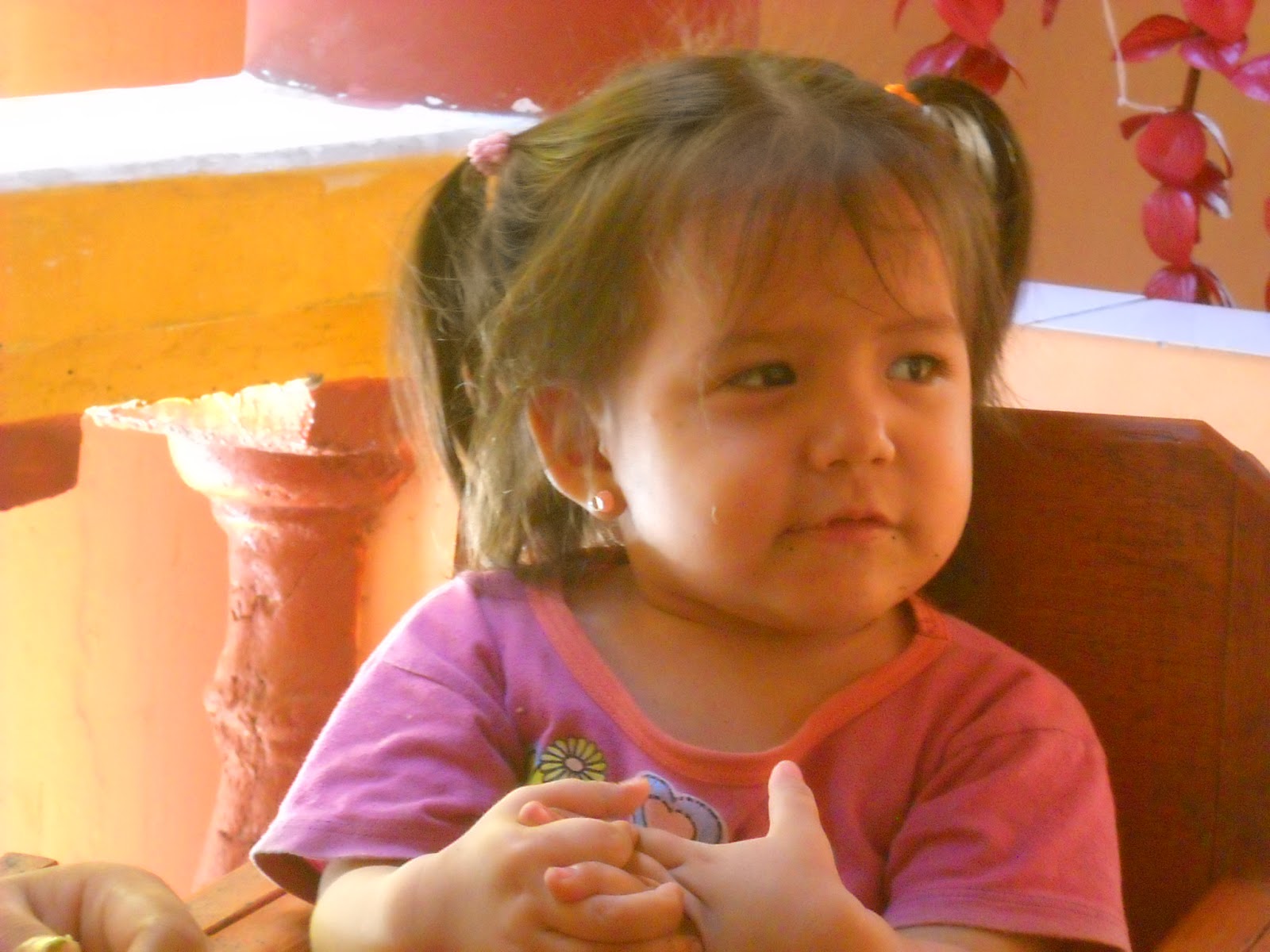
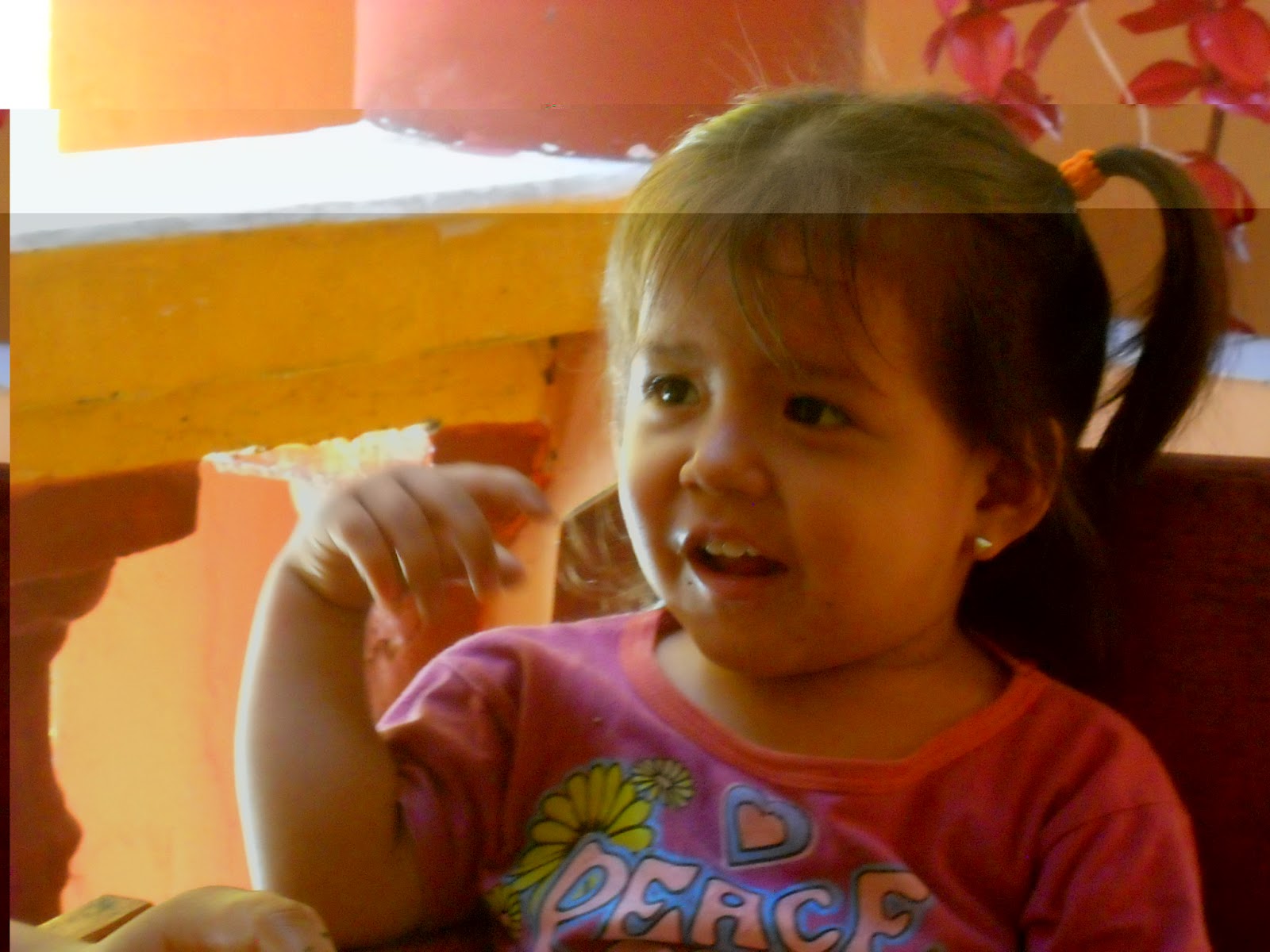
My host family's baby.


It's almost entirely a mystery to me what kids are.


They seem to pick up on everything around them, including my moods that I don't seen to be aware of.


 Moods I don't want to be aware of.


Happy

But even if I am sometimes depressed or miserable in my musing I must still be laughing much of the time because I am surrounded so often by such wonder as families and babies.

I'm old and it's probably too late for me, but I do think I would love to be a father at last.

  A gentle reminder that my book, An Occasional Walker, is available at the link here:

http://www.amazon.com/Occasional-Walker-D-W/dp/0987761501/ref=sr_1_1?s=books&ie=UTF8&qid=1331063095&sr=1-1

And here are some reviews and comments on said book:

http://nodhimmitude.blogspot.com/2012/04/dagness-at-noon.html

Thursday, August 30, 2012

Iquitos, Peru: Belen Market, (Part 3 of 4)

To my knowledge, only time eats plastic. I suspect that time will bring about some creature that devours plastic as its main course. For now, plastic stays with us after it's discarded amidst the muck of the lane ways and waterways.

Back entrance to Belen Market

In the otherworldly Romantic view of poverty there is no filth or disease or garbage.

A la Van Gogh, the road to Belen Market by mototaxi

As I prowl the streets and backways of Belen Market, getting to know the area and its people I also come to know the rest of living things to some degree, those things big enough to see and separate from the mass of throbbing life at the microlevel. I see the birds and the dogs that live on the discards of daily doings. They watch over me as well, 'All watched over by eating machines of loving grace'. 


Guardians of the public health

I like the market area a lot. It's poor and it has more than its share of hard living. But it has an immediacy that appeals to me, a quickness of life one might not find in the "rational" life of other markets where one must weigh and plan to make a living. Here, life is marginal in that there is little room for mistakes. There is little to lose, and thus one mustn't lose anything for fear of losing all.


There is some genuine poverty at Belen Market.
Povrty is not fun. It's not interesting in itself. It's not something better for other people than the good of Modernity. But often one finds the philistine Modernist going on about how happy poor people are and if only the Modernist could give up the rat race he too would go live with the natives and be authentic. Yes, a painted view of reality. Very pretty.


One might romanticize, in oil paint.


In the lower centre of the market stands a ruined site of some pretentious beautification project. People avoid it. The activities of men and women are on the rim of this circle of government meddling.
"Beautiful"


In our modern world of government caring for us because we are too stupid to do so ourselves, tobacco is one of the worst public evils imaginable. If one smokes tobacco, then another might die of cancer. And if not, then the smoker will certainly do so, adding to the general tax burden of all who must pay for his dying. In Belen Market such infantalising is pretty much unknown.

Even poor people take time out for a smoke break.

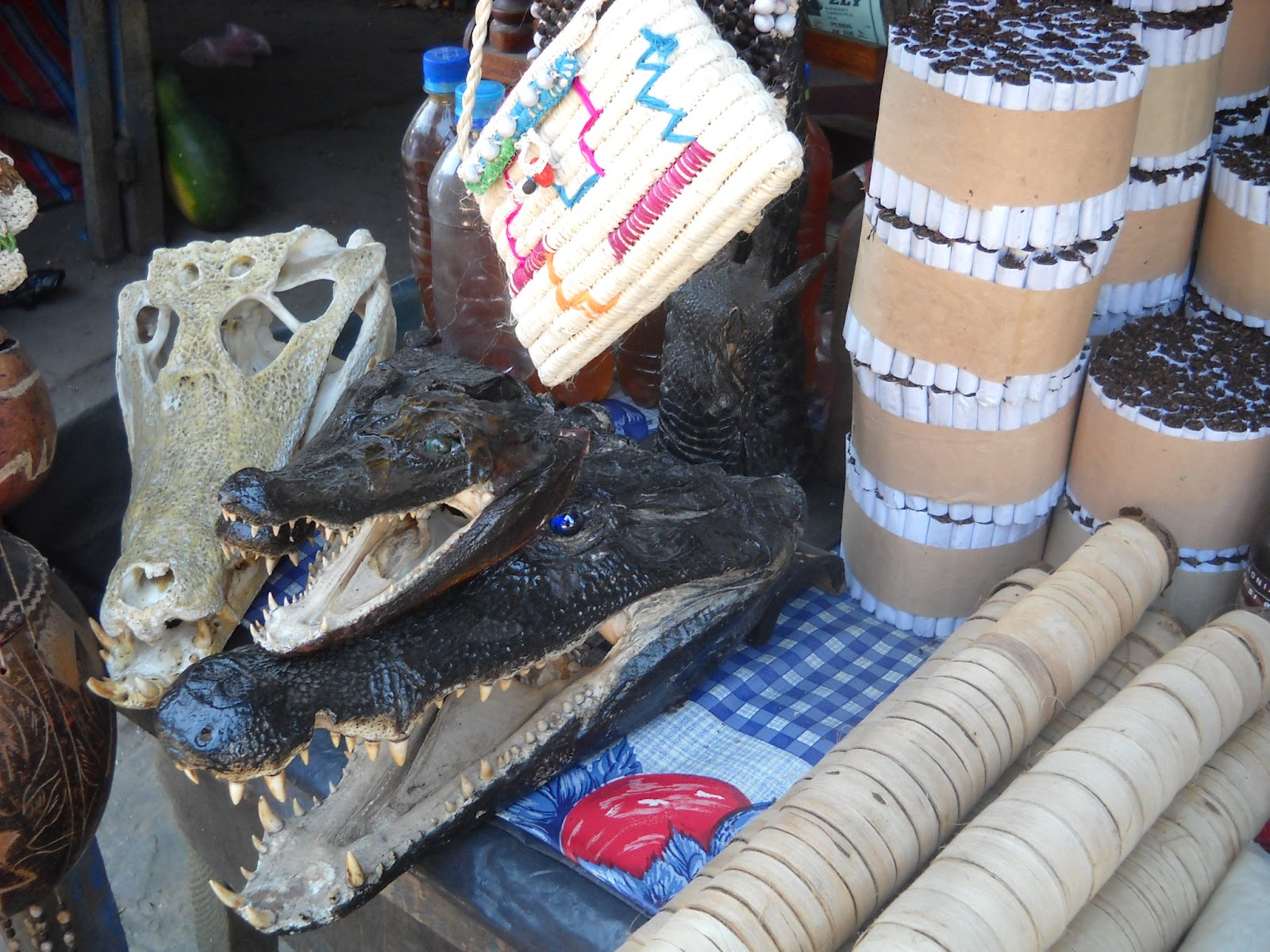
The last place I lived before coming to South America, Canada, it cost, I think, roughly $1,000.00 for a kilogram of tobacco at a local store. At Belen Market it costs 20 soles, or about $7.00. Non-smokers can spend time chatting up the ladies who hand roll the cigarettes.

Tobacco by the roll or by the kilogram

If one is a dedicated non-smoker, there is the option of buying other items from the stall, far healthier, I think.


Skulls and other signs of death

One can shop for a machete and a machete teeshirt, and one can find a bowl to make ones dinner in. Evil earth-destroying bastard that I am, I bought a bowl. It's in the black plastic bag.

Cutting down the rain forest to make bowls and plates for people.

One can shop for the evening meal, stooping down to inspect the meal in the works as people brush past with private concerns that leave others to their own.

Maggots eating to be dinner

I've eaten maggots before, though this time, since I've done that already, I have no enthusiasm for it. But there is value in the meat, and these maggots will fry and nourish someone by day's end. Those who remain in situ will continue their work of churning the small into the smaller and making the tiny bigger.


Looking much tastier than those I've eaten before.


One renders all things: some into small; some into art.  Maggots.


Looking much better as a work of art than the work of dinner


Even the market must close at some point so people can return to their homes and families for private time. Saving the people of the Amazon Rain Forest is a job for those who sell food and goods and provide labour and service. But one must rest, too.

Closing time at Belen Market.


Much of what goes on in the public market goes on everywhere, though mostly in the Modern world hidden from us under plastic wrap and stored in cans and shoved away in the darkness. But there is an army of cleaners eating up the muck to keep us healthy so we can continue on our daily lives in peace.

Foot soldier of cleanliness

There is no ideology in the vulture and maggot world of filth. There is only life. I see life very clearly at the Belen Market.

http://nodhimmitude.blogspot.com/2012/08/belen-market-iquitos-peru.html

http://nodhimmitude.blogspot.com/2012/08/iquitos-belen-market-2.html

http://nodhimmitude.blogspot.com/2012/08/belen-market-iquitos-3.html

  A gentle reminder that my book, An Occasional Walker, is available at the link here:

http://www.amazon.com/Occasional-Walker-D-W/dp/0987761501/ref=sr_1_1?s=books&ie=UTF8&qid=1331063095&sr=1-1

And here are some reviews and comments on said book:

http://nodhimmitude.blogspot.com/2012/04/dagness-at-noon.html