Wednesday, November 16, 2005

U.N. Eurocrats Make Web Grab (update)


There is a war of minds between those who would live as individuals and those who would treat the world's people as farm animals. It it at times a tough call which side to support. When Europeans bring down the hell of Left dhimmi fascism and then pay to import fascist Islam to ruin the continent, one wonders if they deserve to be free at all; whether they are organically equipped to survive independently of their welfare states.

This war of minds between the individualists and the communitarians is a real war in which people are killed: riding subway trains to work in Madrid and London, sitting at work in American offices, going to school in Russia, and so on. Muslims are responsible for the actual murders, but behind them are European politicians who pay for the jihad, give it aid and comfort, who assist in the murder of civilians by protecting and nurturing Islam in European states and by protecting and promoting it world-wide. Chirac lies and commuters die.

These are the same people who want to take control of the Internet because they fear American hegemony and discrimination against "others" and inequity in Internet accessibility, and so on. These are the same men and women who are complicit in the murder of their own people who now want to control even further the lives of the infantalized dhimmi populations under their control.

Below we have two pieces from a Canadian newspaper on the European attempt to control the world's access to information.
***

Peter Foster
Financial Post
Wednesday, November 16, 2005

The first question one feels compelled to ask about this week's World Summit on the Information Society in Tunis is why the 14,000-plus delegates couldn't have got together online.

Silly question, of course. If there's one thing UN bureaucrats like even more than hypocritical posturing on behalf of the poor and dispossessed, it's racking up frequent flier points.

The summit was originally intended to address the "digital divide," a bogus concept based on the unavoidable fact that every time a new technology is developed not everybody immediately has it. Thus the wonders of the Internet suddenly become a cause for fretting on behalf of the "information have-nots."

Such hand-wringing tends to go hand in hand with bashing the biggest "have," and sure enough the United States has come under assault for efficiently overseeing the running of the system. How dare they!

A California-based organization called the Internet Corporation for Assigned Names and Numbers (ICANN) was created by the U.S. Commerce Department in 1998 to administer the master list of Web addresses, which are assigned by ICANN-accredited companies. ICANN manages top-level domains such as .com and .org, as well as country-specific domains, such as .ca. Countries already have control over what goes on in their national Internet space, but apparently some are after something a little more Orwellian.

A group of the world's most repressive regimes, including China, Iran, Saudi Arabia and Cuba, wants the UN to take over from ICANN. Disgracefully, the EU recently threw its weight behind this initiative. Canada appears -- thank heavens -- firmly, or at least provisionally, behind the current arrangement.

The United States has been utterly opposed to this attempted power grab. The notion that the Internet would be more safely administered by the kind of guys who hijacked the UN Human Rights Commission is little less than ludicrous. Just how ludicrous has become obvious from the actions of the summit's host.

Tunisia is reckoned to be one of the more "enlightened" North African regimes, but it severely restricts media freedom, spies on cyber-cafes and blocks Web sites. This week in Tunis a French journalist who had been reporting on Tunisian government repression was beaten up and stabbed, allegedly by state goons. Although one must sympathize with his plight, there is a certain rich irony in his nationality. When French President Jacques Chirac visited Tunis two years ago, he congratulated the country's astonishingly popular President Zine al-Abedine Ben Ali (who regularly pulls in 99% of the vote) and declared, "The most important human rights are to eat, receive medical care and education and have a place to live." Fidel couldn't have said it better: You're being gagged for your own good!

A couple of weeks ago, UN Secretary-General Kofi "oil-for-food" Annan declared in an op-ed piece in the Washington Post that there had been "misinformation" about UN designs on the Internet. He claimed that the UN only wanted to "ensure the Internet's global reach." But has any technology ever spread faster and with more dramatic impact? Mr. Annan noted how important the Internet had been "for people trapped under repressive governments." But then how could he support any attempt by China, Cuba and Iran to control it?

Eventually, Mr. Annan got around to suggesting that "many" were claiming that the U.S. authority over the Internet should be "shared with the international community." However, beyond this usual collectivist UN bafflegab, he also suggested, "What we are seeing is the beginning of a dialogue between two different cultures: the nongovernmental Internet community, with its traditions of informal, bottom-up decision making, and the more formal, structured world of governments and intergovernmental organizations."

This seemingly bland statement was every bit as chilling as any direct attempt to control the Internet. By "nongovernmental Internet community" did Mr. Annan mean the kind of people who used the Internet to organize the recent riots in France, or who use it to co-ordinate the rock-throwing that now routinely accompanies every meeting of international leaders? More basically, the Internet is merely a communications tool, not an agency of political legitimacy. Nobody ever elected any "nongovernmental Internet community."

In fact, the "nongovernmental Internet community" to which Mr. Annan referred is a deliberately seeded and funded web of NGOs who broadly oppose demonic "globalization" and support UN interventionism. They are dragons' teeth sown by the likes of Canada's former UN-meister Maurice Strong to create "calls to action" to which the UN can then "respond."

The whole point about the Internet is that it is essentially -- and blissfully -- free of "governance." ICANN is an overwhelmingly technical organization. If the United States tries to interfere with its operations (as in fact it has done on the issue of pornography), we soon hear about it. That's because the United States, unlike Cuba, China, Iran and Saudi Arabia, is a free society.

Other countries are quite capable of balkanizing the operations of the Internet in retaliation for the U.S.'s "non-cooperation," but in doing so they would make clear their real purpose: to control a medium that threatens their repressive regimes.

http://www.canada.com/national/nationalpost/financialpost/columnists/story.html
***

Compromise on overseeing Internet opens World Summit on Information Society

Wednesday, November 16, 2005

TUNIS, Tunisia (AP) - A UN technology summit opened Wednesday after an 11th-hour agreement that leaves the United States with ultimate oversight of the main computers that direct the Internet's flow of information, commerce and dissent.

A lingering and vocal struggle over the Internet's plumbing and its addressing system has overshadowed the summit's original intent: to address ways to expand communications technologies to poorer parts of the world. Negotiators from more than 100 countries agreed late Tuesday to leave the United States in charge, through a quasi-independent body called the Internet Corporation for Assigned Names and Numbers, or ICANN.

That averted a U.S.-EU showdown that threatened to derail the so-called World Summit on the Information Society.

"If the Internet had been developed in Australia, I don't think we would have had so much heat on this discussion," ICANN chief Paul Twomey, an Australian, remarked of the tension surrounding the U.S. control of the Internet.

The computers under dispute control Internet traffic by acting as its master directories so web browsers and e-mail programs can find other computers.

Although Pakistan and other countries sought a takeover of that system by an international body such as the United Nations, negotiators ultimately agreed, as time ran out, to create an open-ended international forum for raising important Internet issues. The forum, however, would have no binding authority.

The onus now lies with the developing world to bring in not just opinions, but investment to expand the Internet to their benefit, said U.S. Assistant Secretary of Commerce Michael Gallagher.

David Gross, the U.S. State Department's top official on Internet policy, told reporters that despite the U.S. hand in ICANN, Internet governance was not the provenance of one specific country.

"The term . . . is quite broad. It is very inclusive," he said, trying to dismiss claims that the U.S. is holding onto its position as the arbiter of the Internet.

Negotiators had met since Sunday to reach a deal on a draft declaration that world leaders are expected to ratify before the three-day gathering ends Friday.

http://www.canada.com/national/nationalpost/
***

Find this page online at: http://www.news.vu/en/business/Tech/051108-Vanuatu-tech-news-Beware-a-Digital-Munich.shtml

Beware a 'Digital Munich' - Internet Under threat

By Norm Coleman
Posted Tuesday, November 8, 2005

It sounds like a Tom Clancy plot. An anonymous group of international technocrats holds secretive meetings in Geneva. Their cover story: devising a blueprint to help the developing world more fully participate in the digital revolution. Their real mission: strategizing to take over management of the Internet from the U.S. and enable the United Nations to dominate and politicize the World Wide Web. Does it sound too bizarre to be true? Regrettably, much of what emanates these days from the U.N. does.

The Internet faces a grave threat. We must defend it. We need to preserve this unprecedented communications and informational medium, which fosters freedom and enterprise. We can not allow the U.N. to control the Internet.

The threat is posed by the U.N.-sponsored World Summit on the Information Society taking place later this month in Tunisia. At the WSIS preparatory meeting weeks ago, it became apparent that the agenda had been transformed. Instead of discussing how to place $100 laptops in the hands of the world's children, the delegates schemed to transfer Internet control into the hands of intrigue-plagued bureaucracies.

The low point of that planning session was the European Union's shameful endorsement of a plan favored by China, Iran, Saudi Arabia and Cuba that would terminate the historic U.S. role in Internet government oversight, relegate both private enterprise and non- governmental organizations to the sidelines, and place a U.N.- dominated group in charge of the Internet's operation and future. The EU's declaration was a "political coup," according to London's Guardian newspaper, which predicted that once the world's governments awarded themselves control of the Internet, the U.S. would be able to do little but acquiesce.

I disagree. Such acquiescence would amount to appeasement. We cannot allow Tunis to become a digital Munich.

There is no rational justification for politicizing Internet governance within a U.N. framework. The chairman of the WSIS Internet Governance Subcommittee himself recently affirmed that existing Internet governance arrangements "have worked effectively to make the Internet the highly robust, dynamic and geographically diverse medium it is today, with the private sector taking the lead in day-to-day operations, and with innovation and value creation at the edges."

Nor is there a rational basis for the anti-U.S. resentment driving the proposal. The history of the U.S. government's Internet involvement has been one of relinquishing control. Rooted in a Defense Department project of the 1960s, the Internet was transferred to civilian hands and then opened to commerce by the National Science Foundation in 1995. Three years later, the non-profit Internet Corporation for Assigned Names and Numbers assumed governance responsibility under Department of Commerce oversight. Icann, with its international work force and active Governmental Advisory Committee, is scheduled to be fully privatized next year. Privatization, not politicization, is the right Internet governance regime.

We do not stand alone in our pursuit of that goal. The majority of European telecommunications companies have already dissented from the EU's Geneva announcement, with one executive pronouncing it "a U-turn by the European Union that was as unexpected as it was disturbing."

In addition to resentment of U.S. technological leadership, proponents of politicization are driven by fear -- of access to full and accurate information, and of the opportunity for legitimate political discourse and organization, provided by the Internet. Nations like China, which are behind the U.N. plan to take control, censor their citizens' Web sites, and monitor emails and chat rooms to stifle legitimate political dissent. U.N. control would shield this kind of activity from scrutiny and criticism.

The U.S. must do more to advance the values of an open Internet in our broader trade and diplomatic conversations. We cannot expect U.S. high-tech companies seeking business opportunities in growing markets to defy official policy; yet we cannot stand idly by as some governments seek to make the Internet an instrument of censorship and political suppression. To those nations that seek to wall off their populations from information and dialogue we must say, as Ronald Reagan said in Berlin, "Tear down this wall."

Allowing Internet governance to be politicized under U.N. auspices would raise a variety of dangers. First, it is wantonly irresponsible to tolerate any expansion of the U.N.'s portfolio before that abysmally managed and sometimes-corrupt institution undertakes sweeping, overdue reform. It would be equal folly to let Icann be displaced by the U.N.'s International Telecommunication Union, a regulatory redoubt for those state telephone monopolies most threatened by the voice over Internet protocol revolution.

Also, as we expand the global digital economy, the stability and reliability of the Internet becomes a matter of security. Technical minutiae have profound implications for competition and trade, democratization, free expression and access to information, privacy and intellectual-property protection.

Responding to the present danger, I have initiated a Sense of the Senate Resolution that supports the four governance principles articulated by the administration on June 30:

• Preservation of the security and stability of the Internet domain name and addressing system (DNS).

• Recognition of the legitimate interest of governments in managing their own country code top-level domains.

• Support for Icann as the appropriate technical manager of the Internet DNS.

• Participation in continuing dialogue on Internet governance, with continued support for market-based approaches toward, and private- sector leadership of, its further evolution.

I also intend to seek hearings in advance of the Tunis Summit to explore the implications of multinational politicization of Internet governance. While Tunis marks the end of the WSIS process, it is just the beginning of a long, multinational debate on the values that the Internet will incorporate and foster. Our responsibility is to safeguard the full potential of the new information society that the Internet has brought into being.

Mr. Coleman is a Republican senator from Minnesota.

***

The post below, written by Lisa, comes from jihadwatch:

When the EU threw its weight behind the China-Iran proposal, many in the EU were surprised by this action, as made clear in the linked article in the nodhimmitude blog. The EU bureaucracy, being a non-elected government, needs money to survive. The EU is seeking to impose a DNS resolution tax on Internet usage. More than censorship or balkanization, this tax would do more to kill the Internet than anything.

As Jay points out, "Feel free to use it." That is the beauty of the Internet to all except EU bureacrats, to whom nothing should be free, least of all, free from taxation.

For a pittance, less than a week's supply of grande lattes from Starbucks, anyone can own a piece of the DNS space, your very own domain name myownspace.com. For an month's supply of grande lattes, the domain owner can find space on a web server that hosts the domain for 1-3 years. With a little sweat equity and some rudimentary knowledge of HTML tags, anyone can have their own personal space on the Internet.

What the EU would like to do is tax the owner of myownspace.com each time someone's browser sends a DNS request to the DNS root servers to translate myownspace.com to the IP address (e.g., 012.345.678.901) of the space on the host web server. Imagine as a small retail business owner being charged a tax each time someone came into your store to browse and did not buy.

Many websites are informational only, such as this one. No revenue is generated from the visits, much to the chagrin of Mr. Spencer would no doubt be independently wealthy by now. If an information website is popular enough, ad space could be sold (which is also taxed as income) to help cover the DNS tax. But then informational sites contain a message. Even if such message is personally appealing to a prospective advertiser, perhaps many of that advertisers customers are not, leading to a loss of customers.

Since our visits to this site do not make Mr. Spencer independently wealthy, what then would be the effect of a DNS tax levied against him? Even a tax of one tenth of one United States penny could become an impossible financial burden for a website owner who does not generate any income from a highly successful website.

Thus, the website would be taken down. Hugh's excellent commentaries would be silenced.

Posted by: Lisa [TypeKey Profile Page] at November 19, 2005 05:36 PM

Tuesday, November 15, 2005

134 % For Math Egalite

(Angus Reid Global Scan) – Many adults in France trust their interior minister to deal with recent episodes of civil unrest, according to a poll by Ifop published in Le Journal du Dimanche. 53 per cent of respondents have confidence in Nicolas Sarkozy to deal with the situation.

Prime minister Dominique de Villepin is second with 52 per cent. French president Jacques Chirac is a distant third with 29 per cent.

On Nov. 8, Chirac authorized a state of emergency. On Nov. 13, Sarkozy said the government will maintain tough restrictions, saying, "The Migration Act allows expulsion. I am the interior minister and I implement the rules."

Yesterday in an address to the nation, Chirac said the unrest evidenced "a crisis of identity" in the country, adding, "France must instil values and hope in (all) sons and daughters of the Republic."

Polling Data

Do you have confidence in the following political leaders to deal with the civil unrest in the suburbs?
("Yes" answers listed)

Interior minister Nicolas Sarkozy

53%

Prime minister Dominique de Villepin

52%

President Jacqes Chirac

29%

Source: Ifop / Le Journal du Dimanche
Methodology: Telephone interviews with 957 French adults, conducted on Nov. 9 and Nov. 10, 2005. No margin of error was provided.
http://www.angus-reid.com
***

Some here say we're deliberately misreading the poll results. No, friend. The numbers do not lie. The French government is that popular. Just ask them.

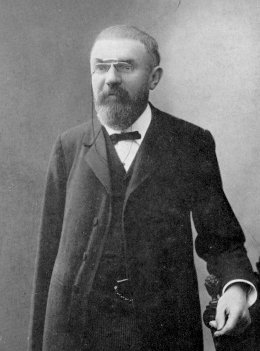
(I asked Henri Poincare. He told me. I'm not making it up. Honest.)

Coito Ergo $um

It pays to riot in Europe. It doesn't pay much, perhaps, but what the hey. No one is giving us any money, so perhaps we should burn cars and smash windows and burn schools, churches, and crippled ladies till they do. It works in France. And the U.S. tax payer is going to pitch in too, via the U.N. Hey, how do you like giving money to Muslim insurgents for rioting and beginning seriously to impose sharia on the whole of France? You get to help pay for it.

And look at how it'll be in the future, this Franco-stein Monster. We have below some thoughts on demographics and Islam in Europe. We get what we pay for, and this is some kind of bargain. First the dollars and sense.
***

PARIS, France (UPI) -- The European Union came to France`s aid with an immediate offer of $58 million, with another $1.16 billion to come, in order to help France`s cope with the social investments deemed necessary to tackle the anger of the boiling 'banlieus.'

The French government has already announced a package of social reforms designed to give career guidance and job placements to all the young unemployed below the age of 25 in the poorest suburbs. The government also plans tax breaks for companies who start branch offices or businesses in the poorest public housing districts where the bulk of two weeks of riots have taken place, with more than 8,000 vehicles torched and more than 3,000 arrests.

The government is also offering a $1,160 lump sum for jobless people who return to work, plus another $174 a month for a year. It has pledged to hire 5,000 extra teachers and teaching assistants and 10,000 scholarships to encourage those with high marks to stay in school, and will open 10 new boarding schools for those who want to leave their run-down housing estates to study.

With scattered incidents of rioting in Germany, Switzerland, Belgium and Holland, the EU is taking the view that the French riots, launched mainly by the teenage children of Arab and African immigrants is becoming a broader European problem. Brussels had its worst night over the weekend, with 42 vehicles torched.

[On the policeman being scapegoated:] 'This policeman is taking the blame for the over-abundant number of declarations from politicians who, after calling on the police`s help over the past two weeks, now want to buy back social peace ,' they said.

[T]he tough policing seems itself to have been part of the problem. Rioters have claimed they are 'an occupying army of whites' -- only 1 percent of police chiefs are of North African descent, compared with 10 percent of the population. The opposition Socialist Party has blamed Interior Minister Nicolas Sarkozy for scaling back the previous 'community policing' system in order to form special squads whose jobs is to retake control of housing estates that had become `no-go` areas for the police.

Meanwhile Islamic Internet sites are calling the riots 'a new jihad' and claiming that the firing of a tear gas grenade into the mosque at Clichy-sous-Bois and the hurling of a petrol bomb at a mosque in Lyon meant that the riots had become a religious war.

'May Allah send them victory,' is the slogan on tajdeed.net and alsaha.com, Islamist sites that the police claim have been used to coordinate the riots. The Algerian Islamist group GSPC (Groupe Salafiste pour la Predication et Combat) is claiming responsibility for the outbreaks after it called in August for French Muslims to 'join the struggle against the Algerian state and its French friends.
'http://news.monstersandcritics.com/europe/article_1062055.php/EU_aid_as_French_riots_slacken
***

This will be old news to many readers here, but it's very nicely written and smart to boot. After all the money goes into the Islamic sink-hole, let's see what we get for it.

Coito ergo sum.
***


It's All About Demographics in France
by Joseph A. D'Agostino

Demographics is not a fashionable issue. Pundits and politicians prefer to discuss other aspects of social difference and reasons for social change such as economics and race.

Most American news stories about and commentators on the recent riots in France have blamed a combination of high unemployment (economics) and discrimination (race) for the riots. They have suggested that more jobs, quotas, and government spending would solve France's problem with her young Muslim rebels.

Unfortunately, another aspect (demographics) tells us that there is no practical solution to France's problem, and the radical Muslims are likely to win.

The importers of the Algerian insurrection certainly seem to have won this round, with French Prime Minister Dominique de Villepin promising more money for areas dominated by immigrants and their offspring and Interior Minister Nicolas Sarkozy forced to back off from the hard line he took when he called the rioters "scum."

French authorities asked Muslim religious leaders to help end the violence, granting tacit legitimacy to the anti-Western imams. Regardless of the intrinsic wisdom of these decisions, the fact that they came in response to violence means they will encourage more violence.

As Heywood Brown said, "Appeasers believe that if you keep on throwing steaks to a tiger, the tiger will become a vegetarian." These riots were organized, at least to a large extent, according to de Villepin and Sarkozy. The tigerish organizers of the riots have achieved a victory. Terrorism works.

So what is France to do? She has failed to create employment for many of her young people, whether French or foreign, due to her socialistic policies, while the French electorate continues to demand continued statism and unaffordable social welfare policies. Despite trying hard, she has failed to assimilate her immigrants and their children, and contrary to what one might think, the children and grandchildren of the initial immigrants tend to be more radical and anti-Western than the immigrants themselves.

The trends are all in the wrong direction. And the self-destructing, cringing, appeasing, and degenerate Western European nation in which they live will never win the respect of these radical young men, who will demand more and more and more. I read that the French media are full of stunned incomprehension: Why are they rioting here, when France has been so steadfast in opposing the war in Iraq and in leading international opposition to the United States generally? Their craven lack of understanding of basic human psychology, the psychology of men not so effete as themselves, condemns them.

The sort of young men that France has nurtured in her bosom are very scary indeed, and sound worse than many inhabitants of our own urban ghettos. In the Autumn 2002 City Journal, Theodore Dalrymple described the vicious street loiterers he saw when he visited Paris' government-planned immigrant suburbs.

"A kind of anti-society has grown up in them—a population that derives the meaning of its life from the hatred it bears for the other, 'official,' society in France," he wrote. "This alienation, this gulf of mistrust—greater than any I have encountered anywhere else in the world, including in the black townships of South Africa during the apartheid years—is written on the faces of the young men, most of them permanently unemployed, who hang out in the pocked and potholed open spaces between their logements. When you approach to speak to them, their immobile faces betray not a flicker of recognition of your shared humanity; they make no gesture to smooth social intercourse. If you are not one of them, you are against them."

The huge amounts of money that the French government has poured into these area has done nothing to improve mainstream France's image among these ghetto-dwellers, and never will. "Benevolence inflames the anger of the young men of the cités as much as repression, because their rage is inseparable from their being," said Dalrymple.

"Ambulance men who take away a young man injured in an incident routinely find themselves surrounded by the man's 'friends,' and jostled, jeered at, and threatened. . . . Of course, they also expect him to be treated as well as anyone else, and in this expectation they reveal the bad faith, or at least ambivalence, of their stance toward the society around them. They are certainly not poor, at least by the standards of all previously existing societies: they are not hungry; they have cell phones, cars, and many other appurtenances of modernity; they are dressed fashionably—according to their own fashion—with a uniform disdain of bourgeois propriety and with gold chains round their necks."

Like all men reduced to useless dependence, they hate those who support them while being unable to throw off their sloth. Raising their standard of living without putting them to work will do nothing. "They enjoy a far higher standard of living (or consumption) than they would in the countries of their parents' or grandparents' origin, even if they labored there 14 hours a day to the maximum of their capacity," Dalrymple noted.

"But this is not a cause of gratitude—on the contrary: they feel it as an insult or a wound, even as they take it for granted as their due. But like all human beings, they want the respect and approval of others, even—or rather especially—of the people who carelessly toss them the crumbs of Western prosperity. Emasculating dependence is never a happy state, and no dependence is more absolute, more total, than that of most of the inhabitants of the cités."

Yet the sloth of the native French is more debilitating, because though a people can survive the advanced degeneracy of its men, as many have, it cannot survive that of its women. If a people's women cease to bear and raise enough children, that people dies. If most of its women decide career, freedom, and pleasure are more important than hearth and family, that people dies. In no other area of life does the accumulation of individual decisions more profoundly affect society as a whole. Feminism kills.

Muslim women, in Europe and most other places, are relatively family- and child-oriented. Most Frenchwomen couldn't care less. Examining the birthrates for the two groups, the "French" French will be overwhelmed by their guests soon enough. France's overall birthrate of children per woman is about 1.9, a little less than the replacement rate. The French government forbids the collection of statistics by race or religion (it's one nation, they say), but demographic experts think that the mostly Muslim immigrant population's birthrate is an astonishing twice that of the native population, possibly higher—and more immigrants flood into France every day, where up to 10% of the population is already Muslim. Some folks think France will be 40% Muslim by 2050, perhaps sooner.

http://www.humaneventsonline.com/
***


We can sum this up in two words: Ennui and Anomie. Tres French.

Monday, November 14, 2005

Polio in Islamic countries is said to be, in the article below, a cultural problem rather than one stemming from Islam. We are left puzzled by the distinction: at what point is Islam separate from culture in Islamic countries? One might argue that if the imam says it's OK to take a vaccine to combat polio and the natives refuse on other ground, then yes, there is a cultural rejection of vaccines rather than a religious rejection. But is that what we read below? We think not. We think what we read is a dhimmi idiot pandering to Islam, a cover-up, if you will, that tries to explain away the influence of Islam on primitive people. Look at the nations suffering now from polio, and see if they are Islamic or not. See who else suffers from polio because the natives will not allow the vaccine. Ask why so people won't allow its use and for what reasons. And ask: "If the polio spreads, who is responsible for it, and what is there to be done about those who will not allow its halt?"

Polio gains power amid pockets of Muslim distrust

Cultural bias, and not religious proscription, is to blame for a resurgence of polio in Muslim countries.

By Kevin Ferguson
(November 14, 2005)

Cultural bias, rather than religious proscription, is more to blame for a resurgence of polio cases in Muslim countries where the disease had been all but vanquished, according to international health workers.

This year, for first time ever, the number of afflicted children in reinfected countries, 718, is higher than that of endemic countries, 426, according to the World Health Organization and UNICEF. ...

Polio is spreading most rapidly in Nigeria and Indonesia, and new cases have cropped up in Yemen, Sudan, Ethiopia, Angola, Mali, Cameroon, Chad and Eritrea. All told, the number of polio cases worldwide has dropped drastically, from 350,000 in 1988 to 483 in 2001. But last year the figure rose to more than 700.

Rumors have been circulating in Indonesia that polio vaccinations are contrary to Islamic dietary law and are a plot by Christians to secretly sterilize Muslim women and introduce the HIV virus. Similar rumors precipitated a 2003 Nigerian outbreak, when Muslim leaders in the country's northern Kano state forbade inoculations for 10 months. The declaration was later rescinded, though the polio virus has since spread across Africa and to Asia.

"Religion is not an issue at the moment," said John Budd, UNICEF's Indonesia communications officer. In West Java, for example, only one child in 500 studied this year was found to have refused polio vaccination because of fears that the shots were haram, or forbidden, by Islamic dietary laws. "In fact, I went to one village where health workers told me that children weren't being immunized due to religion. On discussing it with the local imam, we discovered, on the contrary, he was totally supportive of the campaign. It was the issue of [medical] safety."

While religious beliefs have played a relatively small role in preventing vaccinations, approval by religious leaders is considered essential for polio eradication. In Indonesia, which in March saw its first case of polio in 10 years, international health organizations have been working closely with religious leaders and have received strong support for the campaigns and for the vaccine, according to Budd. "Essentially, [the vaccine] is safe and has been declared halal [or acceptable] by Islamic leaders in Indonesia and all over the world," including the Grand Sheikh Tantawi of Egypt's Al-Azhar University in Cairo, the Grand Mufti of Saudi Arabia and the Indonesian Ulemas Council, he said. "Furthermore, it is haram not to allow vaccination, as this would expose children to dangers of the disease."

Despite such declarations, the notion that polio vaccinations are, indeed, haram surfaces from time to time because the manufacturing process often includes the laboratory cultivation of polio virus from the cell lines of African green monkeys. As such, Muslim leaders offer contradictory or ambiguous advice.

"It's not always as simple as whether or not pork is involved," said Sheikh Suheil Laher, the Muslim chaplain of the Massachusetts Institute of Technology in Cambridge, Mass. "There are animals that can be eaten and those that cannot. Those that can must usually be slaughtered in a certain way." Canine-toothed animals are considered not to be halal, according to many scholars, said Laher, and that makes the omnivorous African green monkey haram. However, there are also concessions or dispensations in Islamic law for medical necessity.

Laher, a Zimbabwean of Indian origin, was inoculated as a child and has no reservations about polio vaccinations. "But in northern Nigeria, where it's mostly Muslim, I can understand that there would be mistrust amongst some people."

Dr. Rehana Kausar, an anesthesiologist and newly appointed president of the Islamic Medical Association of North America in Lombard, Ill., is pointed in her assessment: "To say that you cannot take a polio vaccination has nothing to do with Islam." The Kashmiri physician said she saw no evidence of religious-based objections to polio vaccinations during a medical relief mission to Banda Aceh, Indonesia, in late March.

Rather, residents of small villages and their leaders simply distrust the motivations of foreign aid workers and are uncertain that the vaccinations are medically safe. "This is then multiplied by confusion among health workers about whether they should give sick babies the vaccine," said UNICEF's Budd. Distrust is also bred by the very nature of vaccines, said Nathaniel Raymond, communications advisor for humanitarian response for Boston-based Oxfam America. "People are suspicious of vaccines because they don't see results immediately. If this is the first time, you're introducing an abstraction to them," he said. ...

Such reservations have worldwide impact. Many of the current outbreaks have their genetic roots in Nigeria, where polio vaccinations were suspended for 10 months. From Nigeria, one strain has spread successively to Chad, Sudan, Ethiopia, Saudi Arabia, Yemen and eventually to Indonesia, according to Oliver Rosenbauer, communications officer for UNICEF's Geneva bureau. "I think there is a distrust of health services in these countries," said Rosenbauer. Residents see foreign health workers come regularly to administer polio vaccinations while millions succumb to measles, tuberculosis, malaria and AIDS. They don't understand that there are no vaccinations for malaria and HIV, and that measles and TB shots are more difficult to administer than the oral polo vaccine, he said. "I would begin to get suspicious, as well," Rosenbauer said.

Such distrust is inevitable, said Aminah Beverly McCloud, director of DePaul University's Islamic World Studies Program. "If people know our history, they will understand why there is mistrust," she said. McCloud cited the use of Trovan, an experimental oral meningitis vaccination manufactured by Pfizer and used in clinical trials in Nigeria in 1996 in which – said local residents at the time – 11 children died. Eventually, 15,000 Nigerians died of meningitis during the epidemic. In August, a federal judge in Manhattan dismissed a class-action suit against Pfizer by Nigerian families who claim the drug maker put their children in dangerous drug trials without proper consent. The dismissal bounces the case back to Nigerian courts.

"Religion does play a huge role," said Rosenbauer. "A lot of times the religious leaders are often the community leaders. As a partnership we work with religious and community leaders to try to become advocates for polio eradication."

Meanwhile, the Nigerian polio strain continues to wend its way around the globe. Since March, the strain has paralyzed 225 children in Indonesia. In response, 24 million Indonesian children were immunized in late August as part of the country's largest-ever mass immunization campaign, according to the WHO. More than 750,000 vaccinators, health workers and volunteers went house to house across Indonesia to reach children under the age of five years. Initially restricted to two provinces on the Banten and West Java provinces on Java island, the outbreak is geographically expanding, having recently infected the country's capital, Jakarta, as well as Sumatra and Central Java, said the WHO.

Kevin Ferguson is a freelance writer based in Arlington, Mass. His work regularly appears in BusinessWeek and numerous computer-industry journals.

http://www.stnews.org/News-2281.htm
***

So there we are. The dhimmi idiots contradict themselves, apologize for Islamic obscurantism, fall over themselves to blame modern medicine via a case no one is likely to have heard about, and claim it's nothing to do with Islam that polio is spreading across the Islamic world. What do we do? We shake our heads and wonder how people can be so completely dishonest and still make a living outside the confines of the mafia.

Identity Fascism (2)

"This sacred land has belonged to the Palestinian Peoples from the beginning of time. It is ours, and it will be ours forever."

Chop and change all you like, swap the Palestinians for the "natives" of X in the land of Y, and off you go on a whole new crusade of Identity fascism in the name of Z.

There is no such thing as the X people. There is such a thing as the identity of the X people, and it comes from families grouped together for inbred generations on small parcels of depleted land they couldn't escape from because they were part of the landowners' holdings. There are ties that bind, family ties, and ties of custom and language, and perhaps they make up an ethnic group one can recognise with a keen eye for such things. But for the concept of the people, it's a stretch to claim ownership of land by virtue of ethnicity over the course of anything longer than owns own life time. What my grandfather owned isn't mine but his. Unless, of course, I own what he owned by virtue of atavistic whim. If I can convince myself and you and others that I am continuous by racial identity, and if not there, by language and personal custom, then I can make an argument that this is mine and not yours because I am mine and you are not. If I can convince us that I am of my own kind and you are an outsider, not an authentic insider, not part of the group who owns by virtue of being of the group, then you are excluded by the laws of nature and spirit.

The point of the exercise is to claim that I have an identity within a group, and that you do not share that identity. If you do not share it, you are not a legitimate recipient of the goods and services we have, not entitled to what we have and get and give, and you do not have a right to be among us as an equal.

There are common instances of separateness that make fine sense to all but communitarians of all sorts, those who claim the family of man takes precedence over the smaller group, including the nuclear family. One can find theoretical expression of communitarian families in Plato's Republic and in the writings, such as they are, of Sparta. More recently, a great deal of ink is wasted in the 19th century socialist and anarchist press on the concept of internationalism and community of nations. Today we live with daycare centres and the U.N. Altogether, we have, in the Modern West, multi-culturalism, the family of man and the unity of all peoples. And too we have identity. We have the common idea that man is not individual by only valid in comparison and in contrast to others, and that his identity and validity comes from his belonging to a group who defines him by virtue of boundaries, a shore around a body of water that defines a lake, for example, a body of language that defines a German, a religion that defines a Muslim.

This is a relatively new concept, this idea of identity. Until recently there was no such thing as nation, (cf the Treaty of Westphalia here,) and there was no sense of the universality of man outside his family, clan, and tribe (cf Modern Agriculture here.)

Here we will look at the concept of national identity as formulated by J.G. Herder (cf Herder here.) We will see again more of the roots of the common concepts of our time in the Modern West, and below we will see the evidence again of the fascist reactionary Counter-Enlightenment that is to day Left dhimmi fascism. We will see the roots of such repugnant cliches as "the people." We will see the beginnings of nonsense such as "we have always lived on this sacred land." We will see the beginnings in Herder of the Nazi quest for racial purity and living space for Germans, and also the place held today by those who claim the Palestinians are a people with a right to land by virtue of identity. We will see the mass of confusion that creates both multi-culturalism and fascist identity politics. We will see "We are all one, but you are different, you have a right to the sacred soil of your ancestors, and we, being outsiders, defer." All of the seeds of identity fascism and Left dhimmi philobarbarism are in the two short excerpts below. We will continue this look in further detail in our next post, and there we will sort it out to show the fascism of identity and the roots of modern anti-Semitism as well.

Our first piece is a breathless introduction to Herder from the Goethe Institute, which we have mercifully cut severely for the sake of our readers. We follow it with more of the same from wikipedia. We will take time again tomorrow to follow up on this important and sinister thinker as preparation for the introduction to Fichte, and he as introduction to our eventual look at identity and ecology fascism.

***
"I feel! I am!" - Johann Gottfried Herder
Copyright: BundesbildstelleJohann Gottfried Herder was undoubtedly one of the most significant representatives of Weimar Classicism. Nevertheless, he tends not to be mentioned in the same breath as Goethe and Schiller. However great his impact on the "Sturm und Drang" movement, German Classicism and Romanticism, philology and history may have been, it is not easy to sum up Herder's work under a single heading .

***

Born in 1744 ....

Folk Song and "Sturm und Drang"

Herder studied theology and philosophy in Königsberg (now Kaliningrad) – where his lecturers included Kant and Hamann. He subsequently worked as a teacher and preacher in Riga until setting off for France in 1769. He then got to know Goethe as a result of a chance meeting in Strasburg.

***

Herder looked across state borders in his search for lyric poetry rooted in the traditions of folk song; his anthology, "Volkslieder" (Folk Songs), helped to establish the concept of "world literature", a term coined later by August Wilhelm Schlegel. This significant anthology contains over 90 texts translated from English and Scots, a variety of Romance, Slavic and Northern European languages and Greenlandish.

National character and humanity

In the 19th century, Herder's view of peoples, their languages and the character of individual nations – which was untainted by nationalistic bigotry – also encouraged smaller nations to explore their languages and cultures and regard them as having value in their own right.

The preacher and educationalist had a lasting influence with his belief that nations (like languages as well) are subjects of history and manifest a character of their own tied to particular places and times. The modern philosophy of history begins with Herder, as does a historiography that concentrates its attention on the formation and development of individual nations.

His unfinished major work "Ideen zur Philosophie der Geschichte der Menschheit" (Ideas for the Philosophy of the History of Mankind, 1784-1791) can be read as a synthesis of his thought. ... And he ascribes a central function to humanity: "Humanity is the purpose of man's nature and God has placed our race's own destiny into its hands with this purpose" (Book XV).

Like the "Ideas", Herder's "Briefe zur Beförderung der Humanität" (Letters for the Advancement of Humanity, 1797) .... In the "Letters", Herder argues strongly for other nations to be accorded respect and esteem: "The insolent violator of others' rights, […] the audacious abuser of others' customs and opinions, the boaster who imposes his own merits on peoples who do not desire them will be hated."

Thinking and feeling

The recent interest in the Age of the Enlightenment has probably contributed to the renaissance of Herderian models of thinking. Herder's holistic attitude contrasts with the total domination of rational thought from Descartes to Kant, an approach felt by many to be inadequate. Herder's thinking also encompasses the "other" of reason: "Loving the body without the spirit, said a philosopher full of great insight, is idolatry; loving the soul without the body is zealotry; loving each in the other, is true, whole humanity" ("Vom Erkennen und Empfinden", Of Cognition and Sensation, 1775).
Herder stands for the anthropological turn. Following French sensualism, Herder accords greater significance to sensual cognition, and associates the senses and the intellect more closely with each other. In his posthumous text "Zum Sinn des Gefühls" (On the Meaning of Feeling), Herder sets out his own counterpart to Descartes's "Cogito ergo sum" when he says, "I feel! I am!"

http://www.goethe.de/kug/ges/phi/prt/en72435.htm

***

In 1772 Herder published Concerning the Origin of Speech and went further in this promotion of language than his earlier injunction to "spew out the ugly slime of the Seine. Speak German, O You German".

[....]

Herder wrote that "A poet is the creator of the nation around him, he gives them a world to see and has their souls in his hand to lead them to that world." To him such poetry had its greatest purity and power in nations before they became civilised, as shown in the Old Testament, the Edda , and Homer, and he tried to find such virtues in ancient German folk songs and Norse poetry and mythology.

[....]

Herder's philosophy was of a deeply subjective turn, stressing influence by physical and historical circumstance upon human development, stressing that "one must go into the age, into the region, into the whole history, and feel one's way into everything". The historian should be the "regenerated contemporary" of the past, and history a science as "instrument of the most genuine patriotic spirit".

Volk and Nation

Herder replaced the traditional concept of a juridico-political state with that of the folk-nation as organic in its historical growth. Every nation was in this manner organic and whole, nationality a plant of nurture. He talked of the "national animal" and of the "physiology of the whole national group" , which organism was topped by the "national spirit", the "soul of the volk".

Herder gave Germans a new pride in their origins, ... remarking that he would have wished to be born in the Middle Ages and musing whether "the times of the Swabian emperors" did not "deserve to be set forth in their true light in accordance with the German mode of thought?" Herder equated the German with the Gothic... equally he proclaimed a national message within the sphere of language. ... This urged Germans to glory in their hitherto despised language, and Herder's extensive collections of folk-poetry began a great craze in Germany for that neglected literature.

Along with Wilhelm von Humboldt, he proposed what is now called the Sapir-Whorf hypothesis — that language determines thought . Herder's focus upon language and cultural traditions as the ties that create a " nation" extended to include folklore, dance, music and art, and inspired Jacob and Wilhelm Grimm in their collection of Germanic folk tales.

Herder attached exceptional importance to the concept of nationality and of patriotism — "he that has lost his patriotic spirit has lost himself and the whole worlds about himself ", whilst teaching that " in a certain sense every human perfection is national". Herder carried folk theory to an extreme by maintaining that "there is only one class in the state, the Volk, (not the rabble), and the king belongs to this class as well as the peasant". Explanation that the Volk was not the rabble was a novel conception in this era, and with Herder can be seen the emergence of "the people" as the basis for the emergence of a classless but hierarchical national body.

The nation, however was individual and separate, distinguished, to Herder, by climate, education, foreign intercourse, tradition and heredity. Providence he praised for having "wonderfully separated nationalities not only by woods and mountins, seas and deserts, rivers and climates, but more particularly by languages, inclinations and characters". Herder praised the tribal outlook writing that "the savage who loves himself, his wife and child with quiet joy and glows with limited activity of his tribe as for his own life is in my opinion a more real being than that cultivated shadow who is enraptured with the shadow of the whole species", isolated since "each nationality contains its centre of happiness within itself, as a bullet the centre of gravity". With no need for comparison since" every nation bears in itself the standard of its perfection, totally independent of all comparison with that of others" for "do not nationalities differ in everything, in poetry, in appearance, in tastes, in usages, customs and languages? Must not religion which partakes of these also differ among the nationalities?"

Germany and The Enlightenment

This question was further developed by Herder's lament that Martin Luther did not establish a national church, and his doubt whether Germany did not buy Christianity at too high a price, that of true nationality. Herder's patriotism bordered at times upon national pantheism, demanding of territorial unity as "He is deserving of glory and gratitude who seeks to promote the unity of the territories of Germany through writings, manufacture, and institutions" and sounding an even deeper call:

"But now! Again I cry, my German brethren! But now! The remains of all genuine folk-thought is rolling into the abyss of oblivion with a last and accelerated impetus. For the last century we have been ashamed of everything that concerns the fatherland."

Herder presented formal defiance of the age of reason and Enlightenment . In his Ideas upon Philosophy and the History of Mankind he even wrote "Compare England with Germany: the English are Germans, and even in the latest times the Germans have led the way for the English in the greatest things."

Herder, who hated absolutism and Prussian nationalism, but who was imbued with the spirit of the whole German Volk, yet as historical theorist turned away from the light of the Eighteenth century. Seeking to reconcile his thought with this earlier age Herder sought to harmonize his conception of sentiment with reason, whereby all knowledge is implicit in the soul; the most elementary stage is sensuous and intuitive perception which by development can become self-conscious and rational. To Herder, this development is the harmonizing of primitive and derivative truth, of experience and intelligence, feeling and reason.

Herder is the first in but a long line of Germans preoccupied with this harmony. This search is itself the key to much in German theory. And Herder was too penetrating a thinker not to understand and fear the extremes to which his folk-theory could tend, and so issued specific warnings. While regarding the Jews as aliens in Europe, he yet refused to adhere to a rigid racial theory, writing that "notwithstanding the varieties of the human form there is but one and the same species of man throughout the whole earth".

[....]

http://en.wikipedia.org/wiki/Johann_Gottfried_von_Herder

***

This is a hurried presentation, and if there are questions you, dear reader, wish to ask, please feel free to leave comments so we can return to this with a perhaps clearer exposition later.

Sunday, November 13, 2005

Speechless at the Mill with Slaves


Threaten the safety of delicate Jewish girls in the Netherlands if you will, but don't you dare say anything bad in public about Islam or you'll be in really big trouble.

Poor "youths" discriminated against and marginalized and alienated, dispossessed by the evil Dutch neo-colonialist racists! White-wash this shite as we will, it just won't come clean. But what can we say? Can we find an audience who will listen to common reason and see plain as the azure skies the actuality?

Mostly we're concerned below with the loss of free speech due to Islamic terrorism and Left dhimmi fascism in Europe. There is a growing backlash against Islam and it's radical and murderous adherents, but though that is all to the good if Europe is to survive as an independent bloc of Modernity, it must not slip into White fascist reaction and obscurantism, the very evils of Islam we struggle to overcome.

We'll look below at some reactions to the situations we find, and from that we might begin to ask where we go from here. It's our postion that the West, if it is to maintain its Modernity, must continue in its classical Liberalist pursuit of privacy and free thought. We mount the portrait of our favorite Liberal, John Stewart Mill, to look over our post this day.

Here is a view from the Netherlands on how their nation fares. Below we'll look briefly at England's Hyde Park speakers' corner and some comments on the nature of Canada. We'll follow with views from Denmark, and we'll end with France.
***

NETHERLANDS

Published 10 November 05

Abigail R. Esman


International Desk

By Abigail R. Esman
World Defense Review columnist


The shifting direction of the war on terror

"This is the beginning of the war!" a French Muslim boy called out in the middle of the riots in Le Blanc Mesnil, just north of Paris.

But is it? Or was the war really going on already?

Few Americans have heard of him, but in Europe, more and more are becoming familiar with the name, and the ideas, of Dyab Abou Jahjah, [known also as Abu Yaya,] founder of the now-international Arab European League (AEL) and the Muslim Democratic Party. Handsome, charismatic, well-educated, and multilingual, he has the perfect makings of a political leader, or perhaps better said, a man poised to lead a revolution. And he knows it.

More to the point: as the fury of Muslim youth explodes across the landscape of Western Europe, it's time that others know it, too.

The AEL, first founded in Belgium in 2000, in other words, before September 2001, now has branches in the Netherlands and France, and intends to spread across the E.U., with plans to participate in future European Parliamentary elections as the Muslim Democratic Party. With battle cries like "Whatever Means Necessary" and frequent condemnations of America, Jahjah, who called the 9/11 attacks "sweet revenge," recruits Muslim youth to spread his ideology, a vague series of ideas that occasionally appear moderate, but when added together, call for violent resistance, the destruction of Israel, and the introduction of Sharia (Islamic) law in Europe.

Most recently, Jahjah issued a public statement supporting Iranian president Ahadi Najad's declaration calling for Israel to be wiped off the face of the map. "The foundation of Najad's reasoning is intellectually defendable," he writes in English (the statement in its entirety can be found here) "and despite the fact that his regime is no perfect example of political morality, I argue that his position on this matter is the only possible moral one." (Ironically, the man slain filmmaker Theo van Gogh once called "a pimp for Allah" continues his rant with mention of a "mythical racial-religious holy promise by some god in some religious book" by which, of course, he means the Old Testament. Despite such statements, Jahjah repeatedly insists he has "nothing against the Jews.")

I've thought a lot about Jahjah the last few days: Jahjah who never condemned the killing of van Gogh by a Dutch Muslim fundamentalist; Jahjah who finds the destruction of Israel "the only possible moral" option; Jahjah who has on several occasions incited riots on the streets of Antwerp and now defends the ongoing rioting of Muslim youth outside of Paris. I've thought of Jahjah as Muslim youths riot, too, in Arhus, Denmark, presumably in protest against the publication in a national newspaper of a cartoon drawing of Mohammed.

(Question: why is it that when a political leader in Western Europe refers to the Old Testament as "some religious book," it's all right, but when a Western European newspaper publishes a cartoon of the Prophet Mohammed it brings international protest from across the Muslim world and rioting within the country?)

I've though of Jahjah in all of this because his influence on European Muslim youth men and women ages 18-30, mostly, has been significant enough that the Dutch intelligence service traces the rise of Muslim anti-Semitism and extremism in the Netherlands in no small measure straight back to the AEL.

And I think of this fact every day lately as I walk the streets of my mostly-Muslim neighborhood: because suddenly, now, as an American Jew, if I normally wore a star of David or a chai around my neck, after Jahjah's declaration I would be too frightened to be seen with it on the street.

MORE:

http://www.reportingwar.com/esman111005.shtml

***

Muslim hate-mongers spewing racist exhortations to violence and post-Nazi Islamic supremacy get a free pass in the Netherlands. Look now for the sake of contrast at England and Canada:

BRITAIN AND CANADA

The Speakers' Shrinking Corner
"Britain's tradition of free speech is under assault."

By Joseph Brean in London

[....]

Last week, city council in the norther city of Hull sent staffers an e-mail telling them to stop using such words as "lady," "ethnic," "senior citizen," "love," "spastic," or "dyke" that might cause offence.

In Manchester, a hit and run victim was scolded by police for describing the driver as "fat" ....

"What has gone wrong is the Canadianization of Britain," says professor Christie Davies, a sociologist at the University of Reading....

He means that Canadians, especially Torontonians, led the charge for political correctness at the expense of free speech, and now Britain is following suit. I regard Toronto almost as being in the old East Germany," he said.

Prof. Davies recalled stopping at the city's [Toronto's] Speaker's Corner, which claims to be modelled on the London original, and reading a list of all the things he was not allowed to say....

Read it all at: jbrean@nationalpost.com
***

There is a limit to the burning and looting and murder, and even the Danes seem to be reaching it. What is the limit, and what comes when we pass it? We might think today that nothing can be worse than Islamic fascism, but what is it we're approaching?
***

DENMARK

A Mutual Suspicion Grows in Denmark

By Jeffrey Fleishman, Times Staff Writer
[excerpted]
COPENHAGEN —
[....]

Hate screeds are rattling against this Scandinavian nation's aura of serenity. A Muslim publisher with suspected ties to the Al Qaeda terrorist network was recently jailed for allegedly inciting jihad and distributing videotapes of beheadings. A right-wing radio host reacted by saying that Muslims should be expelled from Western Europe, "or you exterminate the fanatical Muslims, which would mean killing a substantial population of Muslim immigrants."

Such incendiary cases, although exceptional in Denmark, raise fears that if Muslim integration can't succeed in the most liberal of Western nations, it might not be able to flourish in more conservative ones.

With cars burning across France and Islamic radicals going underground in Britain, Europe is reeling from the anger of Muslim communities that for decades have existed as parallel universes. Terrorist bombings and riots have sparked fears on the continent and raised questions about its hallowed ideal of cultural tolerance. Muslims complain that tensions over terrorism have turned them into convenient symbols for conservative politicians pushing anti-immigration policies.

From the Danish Parliament to the immigrant neighborhoods in Norrebro, ... echoes with suspicion. Liberal freedom-of-speech laws are being challenged by Hizb ut-Tahrir, an extremist Islamic organization recruiting Muslims to battle coalition forces in Iraq that include 530 Danish troops. In a society that prides itself on racial parity, voters have elevated the xenophobic Danish People's Party from the fringes to the country's third most powerful political bloc.

"I believe integrating a large number of Muslims can't be done. It's an illusion," said Martin Henriksen, a 25-year-old legislator for the People's Party. "They don't have the desire to blend in with other people. We've been a Christian country for 1,000 years and we are the oldest monarchy in the world. I want to get married and have a lot of kids who can walk around in a society not influenced by Muslims."

This attitude mirrors growing cultural strains, anxiety over possible terrorist attacks and the Danish People's Party's frequent criticisms of the 200,000 Muslims among the nation's 5.4 million people. The tilt to the right is starkly seen in the number of asylum applications the government has approved: 53% in 2001 and 10% last year.

...Fadi Abdul Latif, the spokesman for Hizb ut-Tahrir in Denmark, accused conservatives of changing the meaning of integration. Whereas it once meant attending Danish schools and speaking the national language, he charged, now it forces Muslims into accepting European values on issues including sexuality and religion.

"This is the Europe of the Middle Ages," said Abdul Latif, a Palestinian born in a Lebanese refugee camp who moved here years ago. "When others want to force their values on Muslims, we must reject this. We neither want to assimilate nor isolate. We want to keep our identity and carry our message of Islam to others. But Europe is using the climate of war and terrorism to force assimilation."

Hizb ut-Tahrir seeks to establish an Islamic caliphate and expel Western influences from Muslim nations. Outlawed in Sweden and Germany, the group faces a possible ban in Britain after the London transit bombings in July. In 2002, Abdul Latif was charged with distributing hate literature that revered suicide bombers as martyrs and quoted a verse from the Koran: "And kill them from wherever you find them, and turn them out from where they have turned you out." He received a 60-day suspended sentence.

He also circulated a flier in 2004 urging Muslims to "go help your brothers in Fallouja and exterminate your rulers if they block your way." Abdul Latif said in an interview that Hizb ut-Tahrir was rallying fighters in the Middle East, not Europe. The Danish government, whose support of the Bush administration in Iraq has drawn threats from Al Qaeda affiliates, has reopened an investigation into Tahrir.

Abdul Latif is not the only voice testing Denmark's free speech boundaries. Said Mansour, a Moroccan-born Danish publisher who has been under intelligence surveillance for years, was charged in September with instigating terrorism after police raided his home and confiscated allegedly "inflammatory jihadist" videos and speeches. ...

Cultural relations were further strained later in September when Jyllands-Posten, the nation's leading newspaper, printed 12 caricatures of the prophet Muhammad, including one suggesting he had a bomb in his turban. The newspaper said the illustrations were an exercise in free speech, but Muslims viewed them as a provocation. Two newspaper cartoonists were reportedly driven into hiding.

Terrorism and immigration have propelled right and center-right political parties not only in Denmark but also across the continent. A breakdown of the four largest parties in the European Parliament shows that rightist parties hold 355 seats, compared with 243 held by liberal ones.

Thirty-five percent of Copenhagen residents listed integration as the most important issue in the upcoming elections Tuesday, according to a poll published by Jyllands-Posten. In a similar survey last year, only 13% considered integration a significant problem.

"Twenty-five percent of all children in Copenhagen and more than 10% of all children in Denmark are being born to non-Danish mothers. What is happening is a gradual scooping out of the Danish population," Mogens Camre, a member of the Danish People's Party and the European Parliament, said last year. "Islam is threatening our future…. That faith belongs to a dark past, and its political aims are as destructive as Nazism was."

Ahmed abu Laban, an Islamic leader in Copenhagen, said Christian and Muslim extremists are "manipulating the sense of insecurity. ... I tell many Muslims, 'Europe is sensitive today.' It won't tolerate any act of terror. It is fed up."
http://www.latimes.com/
***

The French don't want to show the rioting on television, not because it will provoke copy-cat riots-- but because they don't want to drive voters to the Right! To the rescue ride the Eurocrats in their Mercedes to pass out cash to the Islumpen masses. Ah, thank God for Bhatman.
***

FRANCE

The deportations could begin as early as Monday, Interior Minister Nicolas Sarkozy said, but it was not clear how many people would be affected.

The European Union offered France a quick handout of 50 million euros (2.4 billion baht) to help recovery from the riots. European Commission head Jose Manuel Barroso said up to 1 billion euros could be made available eventually for job creation and to help social cohesion - 48.2 billion baht.

French insurers estimate that damage claims alone will reach 200 million euros.

According to Sarkozy, about 120 foreigners, many of them with legal status, have been arrested during the riots, but most of them may be protected by French law. For example, minors and persons with family on French territory will probably not be deported.

"It's not about numbers," Sarkozy said. "It's the principle."

Since the rioting began on October 27, some 8,400 cars have been destroyed by fire and 2,652 people have been detained

Two policemen were reported injured in the unrest overnight, including one officer who was taken to hospital after being struck in the head and shoulder by a bowl[ing] ball in the Paris suburb of La Courneuve.

http://www.bangkokpost.com/breaking_news/breakingnews.php?id=61677
***

Le Pen is laughing. As Joseph Brean notes above, the Canadian course is taking us all down the dark path to East Berlin. The flavour might be French but the aftertaste will be purely sauer. The list of what we can and cannot utter in public is growing, and the list of angry voters is swelling at the same time that property goes up in flames and the Muslim communities in the West are inflamed by the rhetoric of entitlement and privilege from the Left dhimmi fascists who use them as proxies in the war against Modernity. We must speak up for free speech and democracy, and that must mean we speak openly about the threat of fascism from the Islamic communities in our midsts and against those among us who would have us silenced to soothe their senses of sanctimony, to quell their moral hysteria, to allow them their continued daydream of ruling the infantalized and passive populations of the West.